LISTEN TO THE EPISODE
In 1963, Ray Barretto scored a Top Twenty pop hit with “El Watusi” — a novelty single that sold a million copies and nearly derailed his career. Five years later, he made the album that proved he was never a novelty act. Recorded with no overdubs at RCA Studios in New York City, Acid assembled a Nuyorican dream team — Roberto Rodriguez and Rene Lopez on trumpets, Orestes Vilato on timbales, Louis Cruz on piano, Bobby Rodriguez on bass, and Adalberto Santiago on vocals — into a conjunto-style unit built for the dance floor and beyond.
In this episode of Deep in the Stacks, we trace how Barretto bridged boogaloo and the salsa explosion, catching the moment when jazz, Cuban music, soul, and funk converged into something entirely new on Fania Records.
THE RECORD

ABOUT THE ARTIST
Ray Barretto
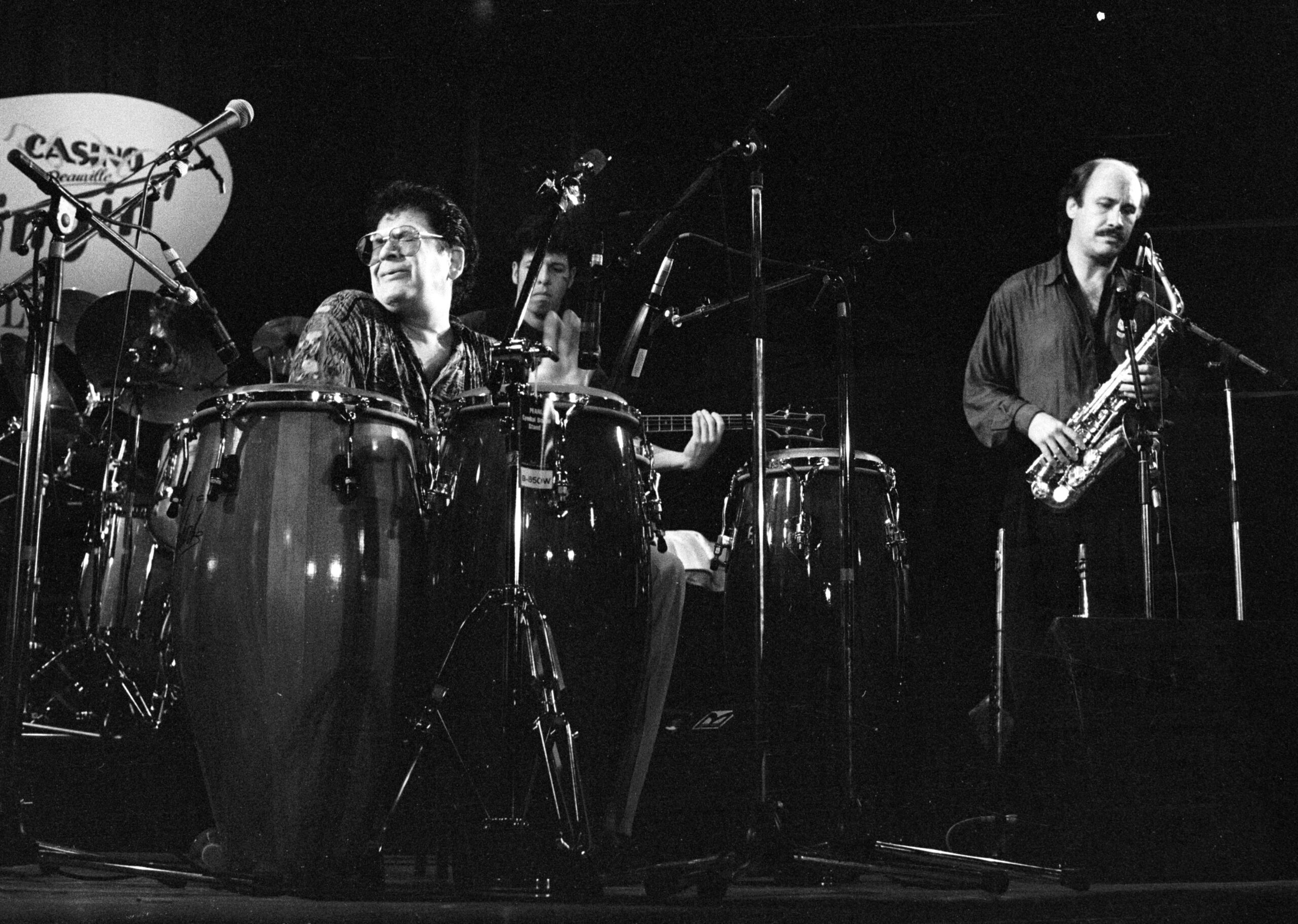
Ray Barretto (1929–2006) was a Brooklyn-raised conguero who became one of the most important figures in Latin music and Latin jazz. After serving in the Army in Germany — where he first heard Dizzy Gillespie’s Afro-Cuban records — he returned to New York and spent the late 1950s working the jazz and Latin circuits, sitting in with Charlie Parker, Red Garland, and Tito Puente. His 1963 single “El Watusi” became a surprise pop hit, but Barretto saw himself as a serious musician, not a novelty act. By the mid-sixties he had become a central figure in the boogaloo movement, fusing Afro-Cuban rhythms with soul and R&B for a young, bilingual audience.
Signing with Fania Records in 1967, Barretto assembled his own conjunto-style orchestra. Acid was the first album — raw, immediate, no overdubs — and it became a bestseller that helped establish Fania as the label of the emerging salsa movement. He followed it with Hard Hands (1968) and Together (1969), cementing his reputation alongside contemporaries like Willie Colon and Hector Lavoe. He was also a key member of the Fania All-Stars, the supergroup that took salsa worldwide.
In later decades, Barretto pivoted back toward jazz, recording for Concord and Blue Note and earning a Grammy nomination for Taboo (1994). He played and recorded right up until his death in 2006, leaving behind a body of work that connects bebop, boogaloo, salsa, and Latin jazz into a single, unbroken line. Explore more episodes.
SESSION DETAILS
Recorded
1967
Studio
RCA Studios
New York City
Producer
Harvey Averne
Engineer
—
Personnel
Roberto Rodriguez — trumpet
Rene Lopez — trumpet
Orestes Vilato — timbales
Louis Cruz — piano
Bobby Rodriguez — bass
Adalberto Santiago — vocals
Pete Bonet — vocals
WHY THIS ALBUM MATTERS
Acid matters because it's the album where Latin music stopped being a separate aisle in the record store. Ray Barretto had built his name as a sideman on dozens of jazz dates — Kenny Burrell, Gene Ammons, Lou Donaldson all called him — but Acid was the moment Spanish Harlem boogaloo, Cuban son montuno, and the soul-jazz vocabulary of late-60s Blue Note merged into a single language. The opening track "El Nuevo Barretto" became a breakbeat that hip-hop producers would mine for decades. Fania Records' rise as the Motown of Latin music traces directly through this record, and it's one of the few late-60s sessions that you can hear cited equally by salsa musicians, jazz heads, and DJs.

Side 1

Side 2
Fania SLP-346 · Original pressing
Every episode, free to stream.
Listen to Deep in the Stacks wherever you get your podcasts, or visit us at Kissa Kissa in Crown Heights.