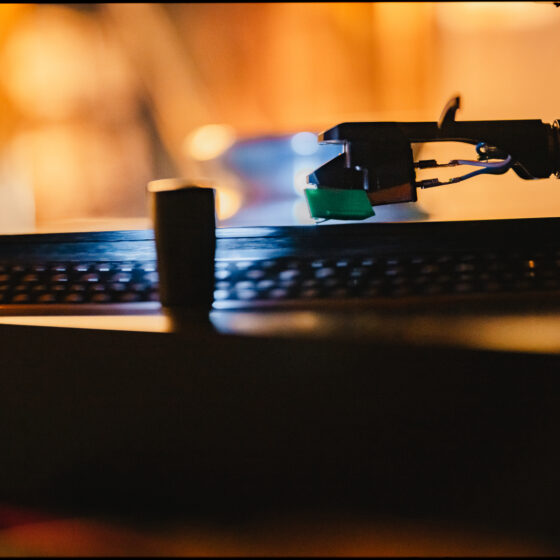

Ortofon Concorde MKII Club: The Cartridge on Both Our Turntables
Every record here starts with a diamond in the groove
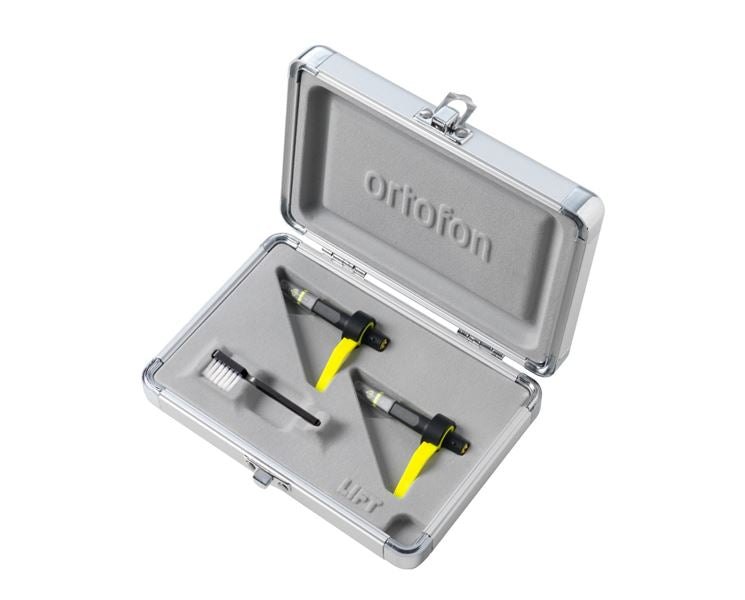
Two Technics SL-1200 turntables sit side by side behind the bar. One side plays while the next gets cued by hand, so the music runs from doors to close, seven nights a week. Before any of it reaches the tube electronics and the Harbeth speakers, it passes through a diamond riding the groove, and on both turntables that diamond sits in an Ortofon Concorde MKII Club.
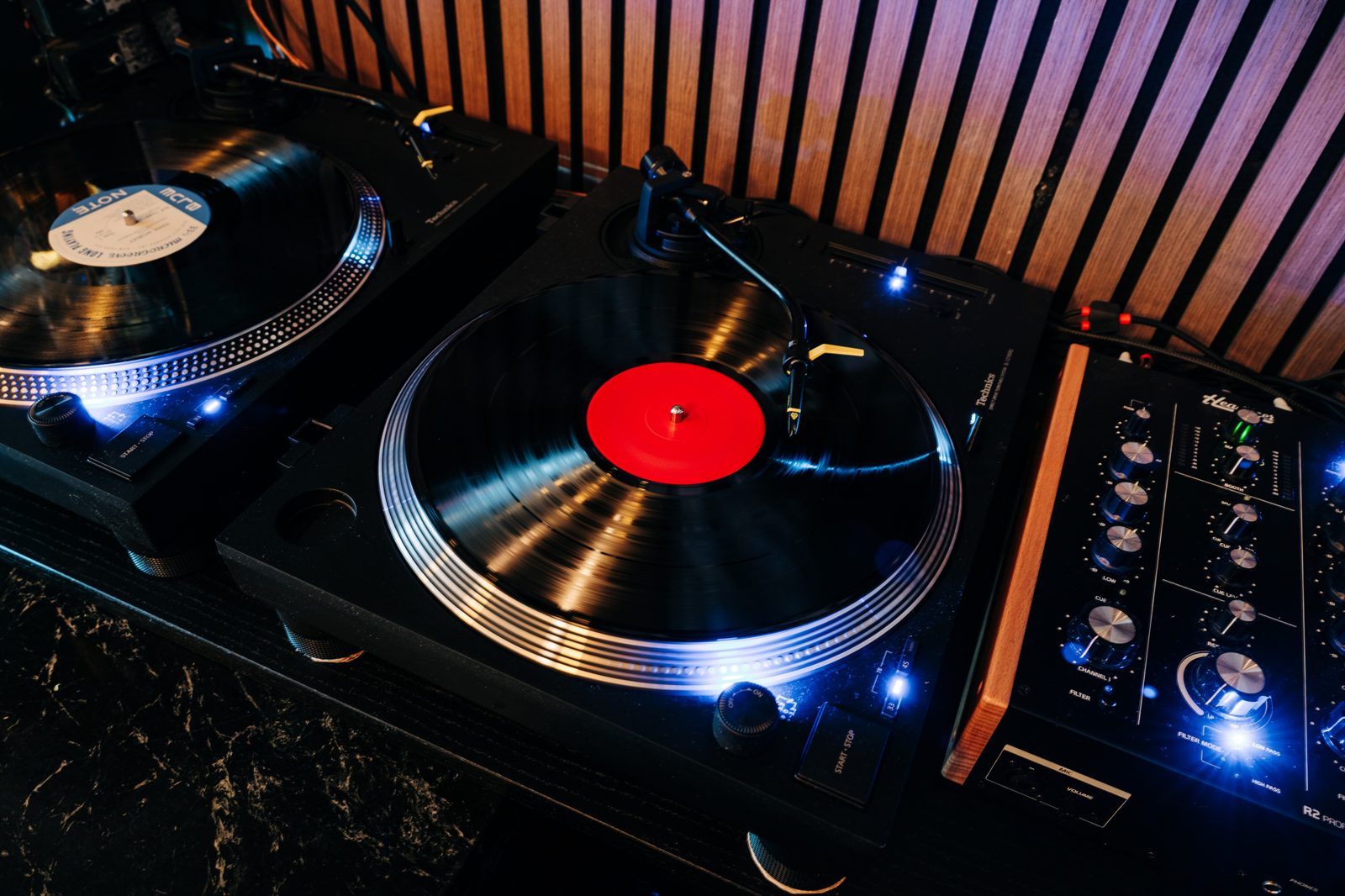
The record we’d put on to show someone the system is the Blue Note Tone Poet reissue of Donald Byrd’s Byrd in Flight, for the crispness of the drum sound and the brightness of the horns against the propulsive low end. With the new Clubs on, the sound in the room is like being in the space for a live performance, the music enveloping you in rich, warm detail.
The cartridge sets how much of the record reaches the room
The amps and the Harbeths can make the signal louder and keep it clean, but they can’t put back detail the stylus didn’t pick up.
A ballad’s softest bars stay above the hiss
On a Listening Night, with voices low at the bar, the end of a ballad counts: the last held note and the pause before the next track. Every phono stage adds a faint hiss of its own, and the stronger the cartridge’s signal, the further above that hiss it sits. Ortofon rates the Club at 8 mV, where Sound on Sound puts a typical moving magnet cartridge at around 5, and says the higher output asks less gain of the phono stage, for cleaner, more faithful reproduction.
The elliptical stylus pulls out the brushes and the breath
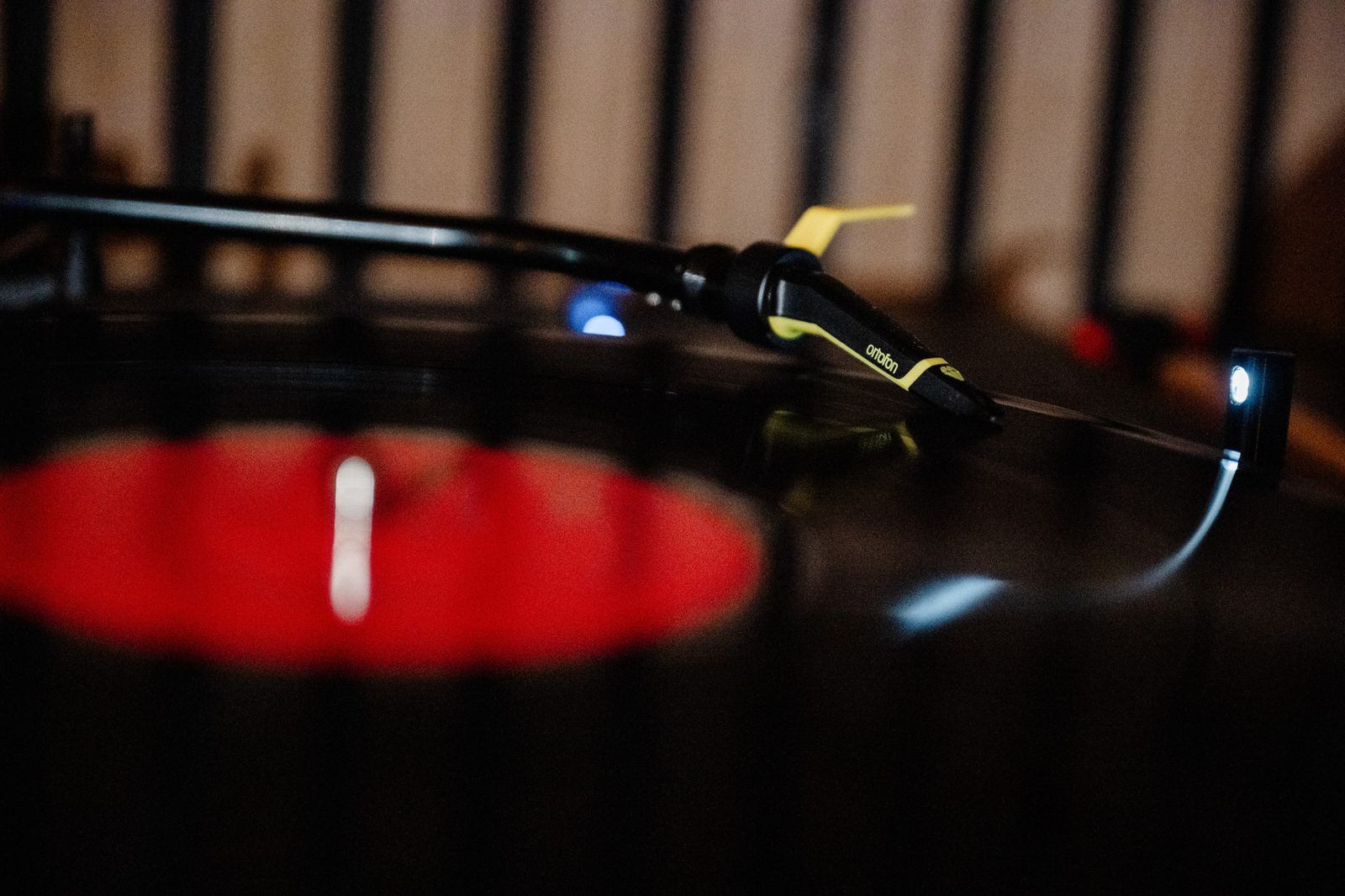
A lot of what makes a jazz record feel close is small, like brushes on a snare or the breath at the front of a saxophone note. Four of the six Concorde MKII models use a round, spherical tip, which Ortofon recommends for scratching and hard back-cueing. The Club’s Special Elliptical diamond is narrower front to back, so it traces the fine, high-frequency wiggles in the groove more accurately.
The Club keeps early stereo’s left and right channels apart
Many stereo jazz records from the late 1950s and early ’60s split the band hard left and hard right, sometimes with the horns in one speaker and the rhythm section in the other. Ortofon rates the Club’s channel separation at 25 dB at 1 kHz and 15 dB at 15 kHz.
The Club tracks a full big band without breaking up
When a big band hits full volume or a bassist digs in, the groove swings at its widest, and a cartridge that can’t follow turns the note into a sputter. Ortofon’s own test record cuts 315 Hz tones at amplitudes up to 100 µm, and the Club is rated to track the largest of them.
Made to be handled every night
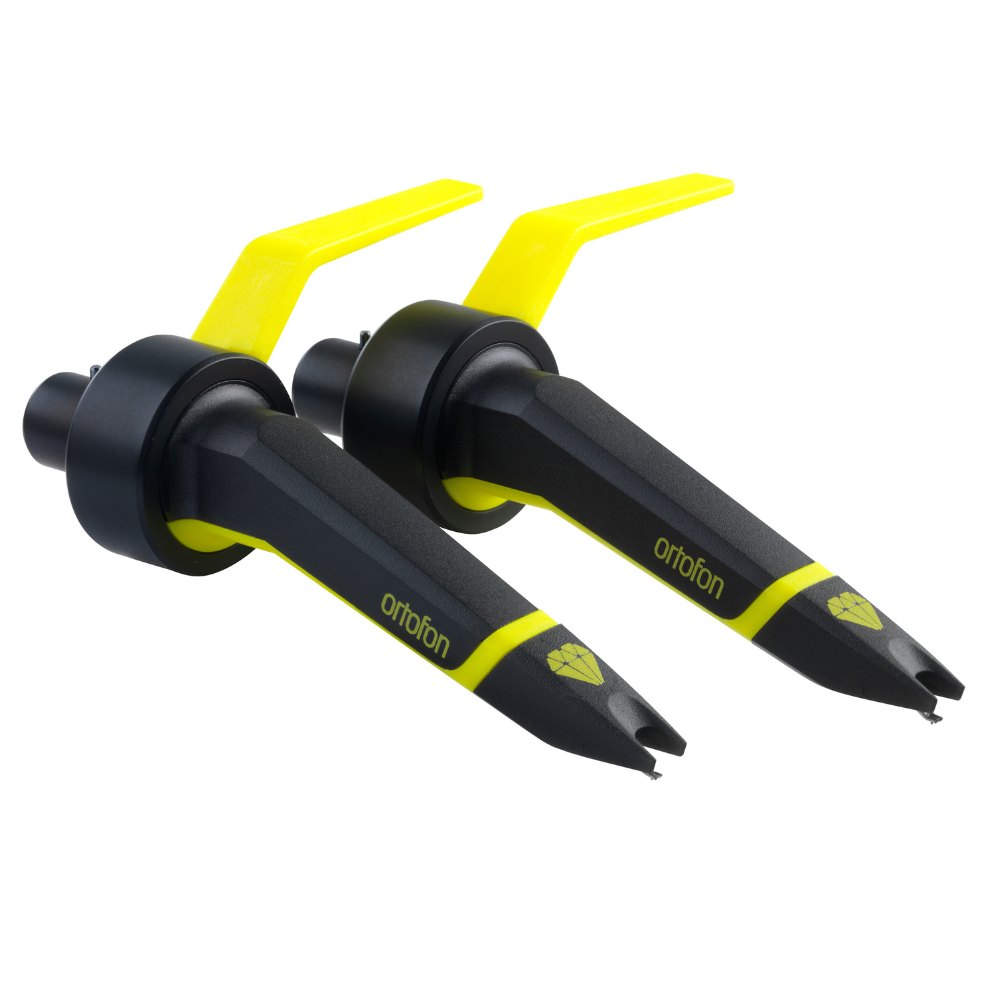
Ortofon built the Concorde MKII line for club work. Cartridge and headshell are one body, which twists onto the end of the tonearm on a bayonet mount, and the long finger lift gives whoever’s cueing something to hold when they lower the stylus onto a side. Ortofon introduced the Concorde shape in 1979, and it won the company a Danish Industrial Design Award.
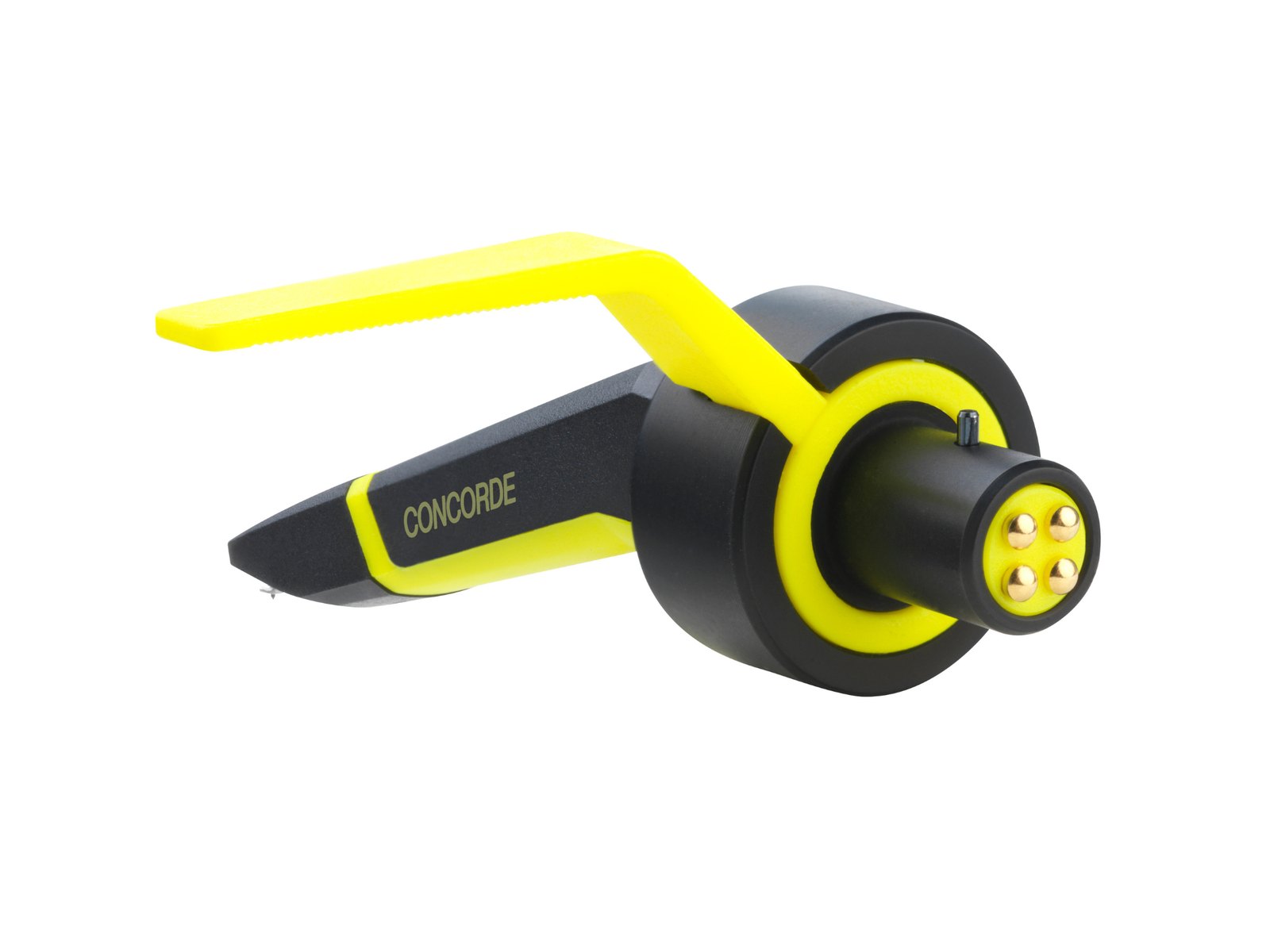
The full Concorde MKII Club specs
Of the six Concorde MKII models, the Club is one of two with an elliptical stylus, and Ortofon says it gives “the best sound quality achievable for traditional vinyl playback.”
Sources: Ortofon’s product pages for the Concorde MKII Twin Club and the Concorde MKII Club; frequency range from Ortofon’s DJ catalog.
The Club is a moving magnet design, and its signal starts out tiny
A record stores sound as a wiggle in one long spiral groove. The stylus rides it, and the movement travels up the cantilever, the tiny arm the diamond sits on, to where motion becomes electricity. The Club is a moving magnet cartridge: a small magnet on the cantilever moves between fixed coils and induces a current in them. A moving coil cartridge does it the other way around, with the coils on the cantilever and the magnet fixed.
A typical moving magnet puts out around 5 mV and needs about 40 dB of gain from the phono stage; a moving coil, around 0.5 mV and about 70. Records are also cut with the bass turned down and the treble turned up, so the phono stage applies an RIAA curve that reverses it until the response comes out flat. Then the preamp and power amps bring the signal up to speaker level.
Steel needles gave way to diamond, sapphire and osmium before stereo arrived in 1958
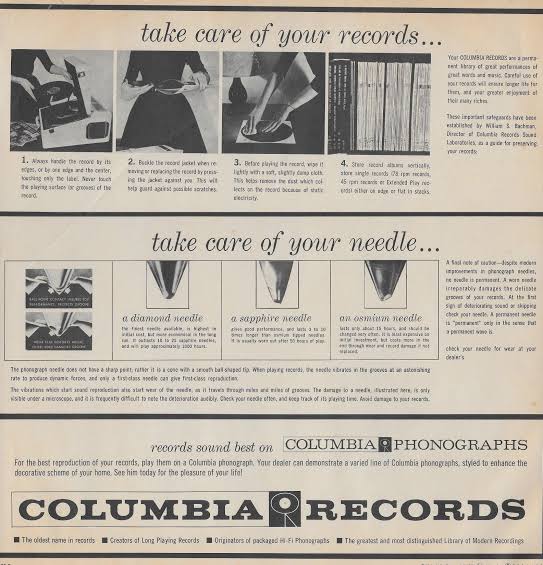
By 1920, Edison was the only disc company not using steel needles. In 1948 Columbia Records introduced the long-playing record, turning at 33⅓ RPM with very fine grooves and over 20 minutes a side. RCA’s 45 followed shortly after, and over the 1950s the two formats replaced the 78. By the LP era, diamond, sapphire and osmium needles were all in use, and Columbia’s needle-care insert below compares the three.
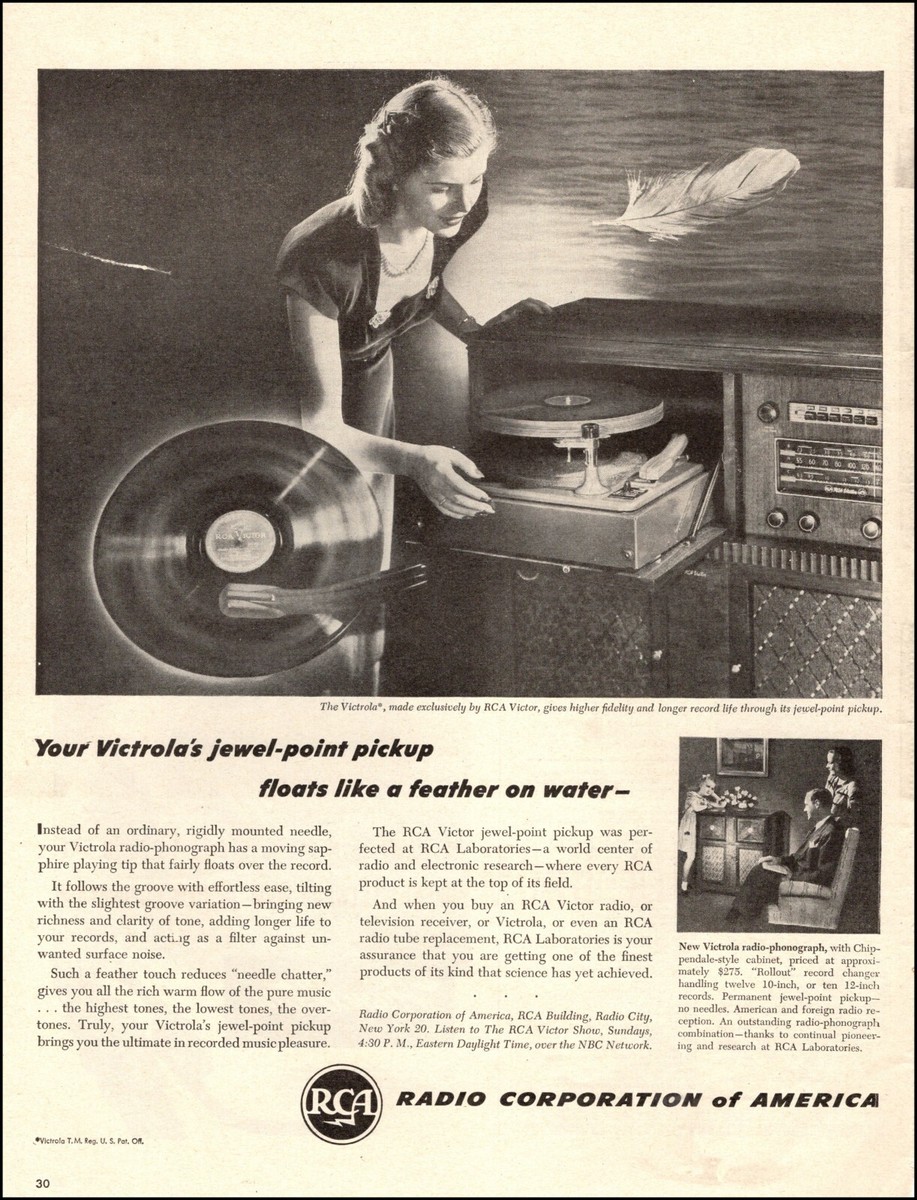
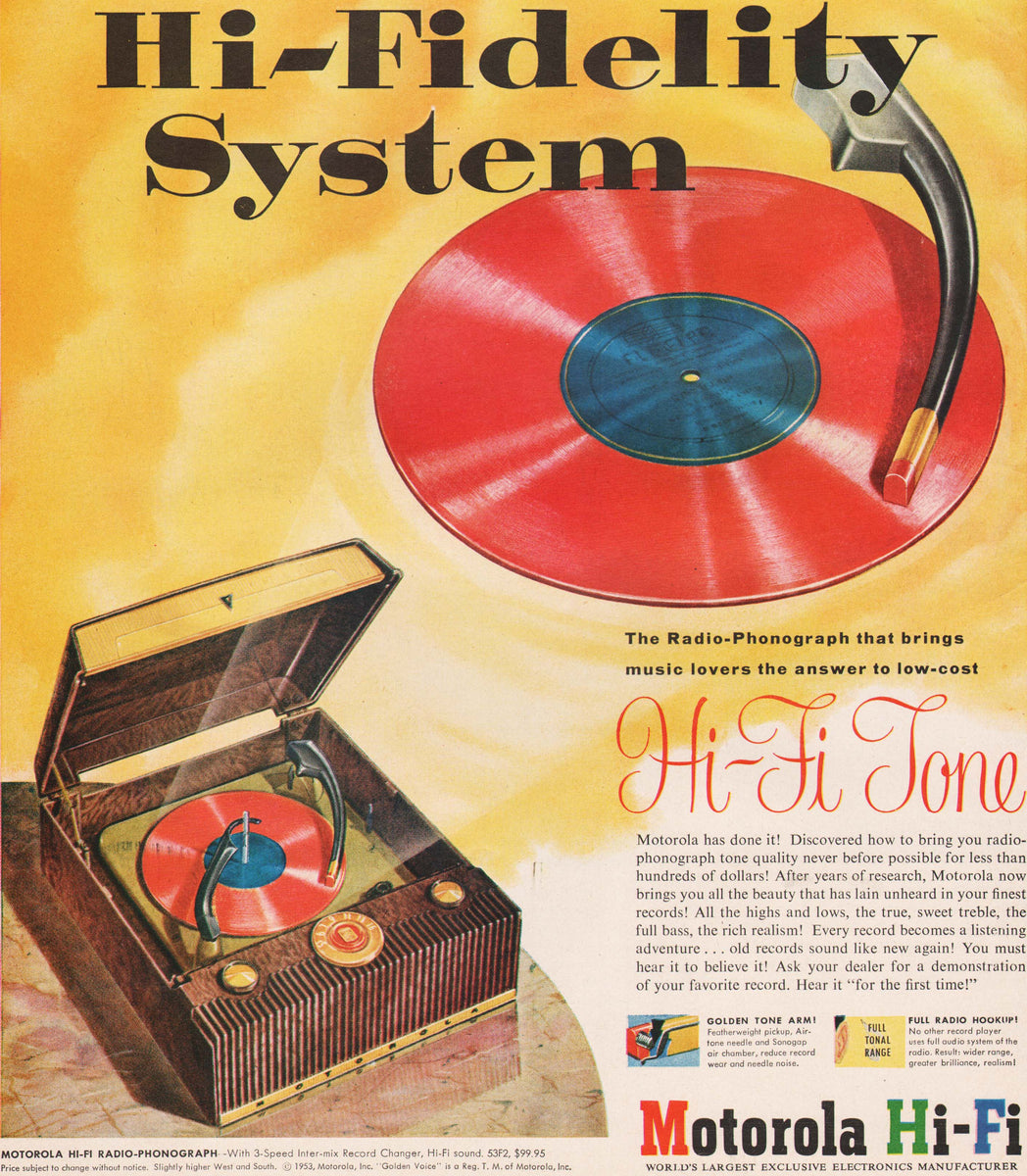
Stereo records reached the market in 1958. Each wall of the V-shaped groove carries one channel, inside wall left and outside wall right. Ortofon, founded in 1918 by Danish engineers Axel Petersen and Arnold Poulsen to work on sound for film, had built what it calls the world’s first moving coil cartridge in 1948. In 1959 it answered stereo with the SPU, short for “stereo pick-up.”
A lot of our records come from that era, when hi-fi reviews ran in The Atlantic and The Nation, as Stereophile’s Alex Halberstadt points out. The August 1956 issue of Audio carried an ad for Fairchild’s 225-A, one of the earliest commercial moving coil cartridges, with a 1 mil diamond stylus and a tracking force of 4 to 8 grams, because tonearms of the day still had to handle 78s. Sherman Fairchild, whose company built it, was an avid music fan with a recording studio in his New York City home.
Sources: Ortofon, Our story and What is a moving magnet cartridge?; Encyclopaedia Britannica, Phonograph and Sound recording; Library of Congress, History of the Edison Disc Phonograph; Stereophile, Tom Fine, Phono Cartridge Variations and the Modern Industry, and Alex Halberstadt, Music Among the Fairchildren; Sound on Sound, Martin Walker, Digitising & Restoring Tapes & Records, Hugh Robjohns, Do I really need an RIAA preamp?, and Q&A, November 2002.
The rest of the system is analog from the stylus to the speakers
We designed it for this room with The Music Room in Colorado, and our sound system page lists every piece.
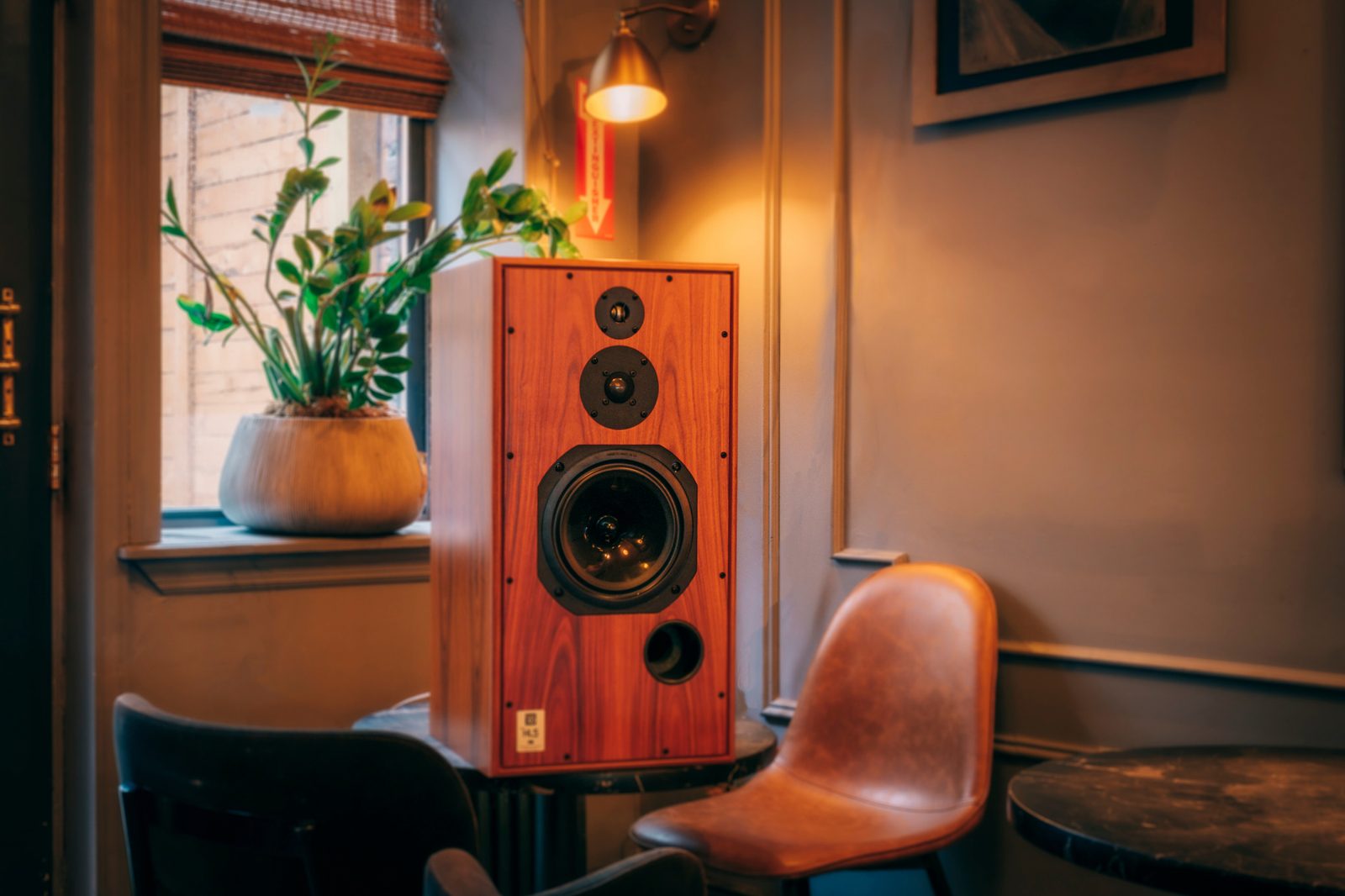
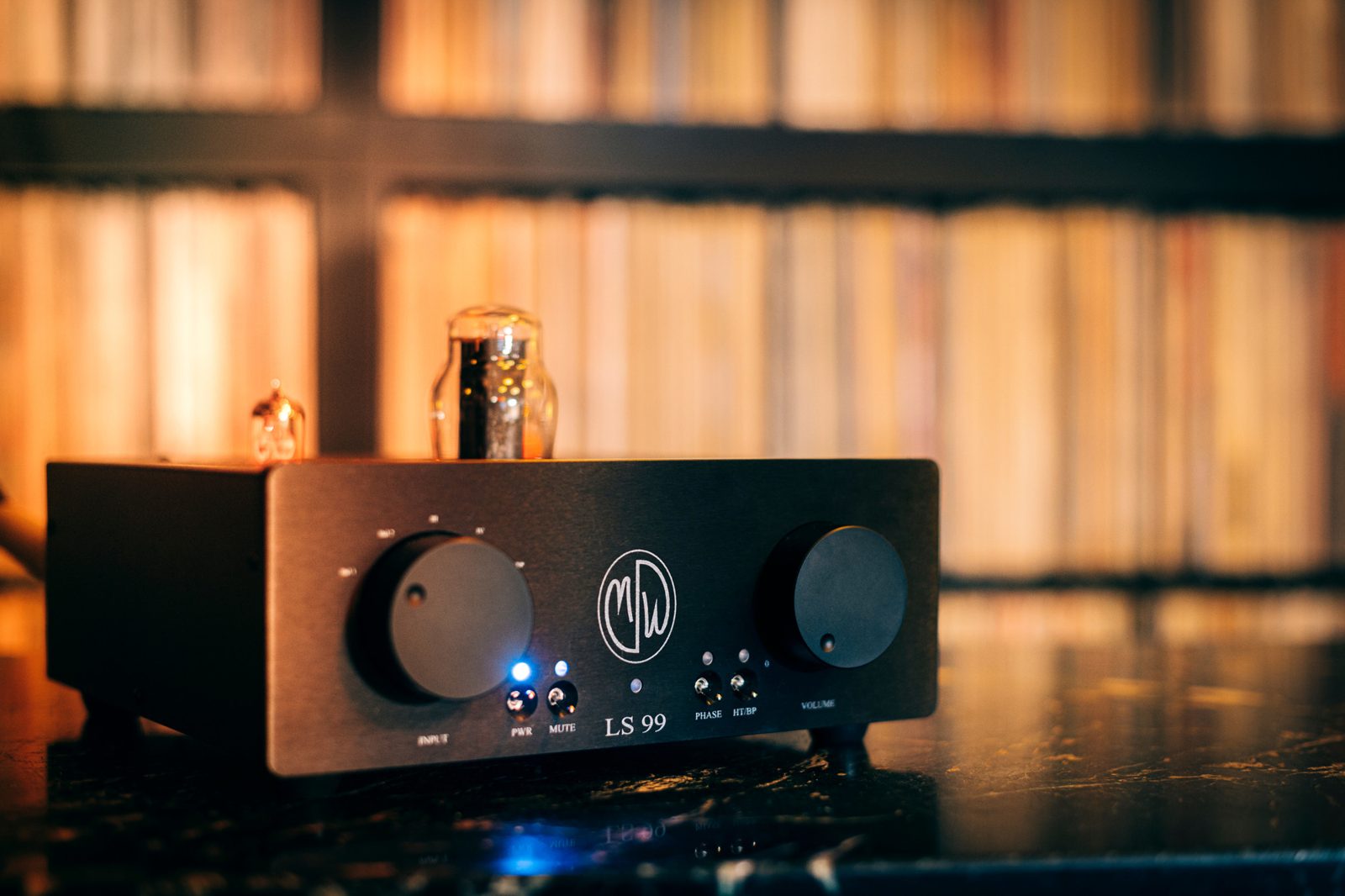
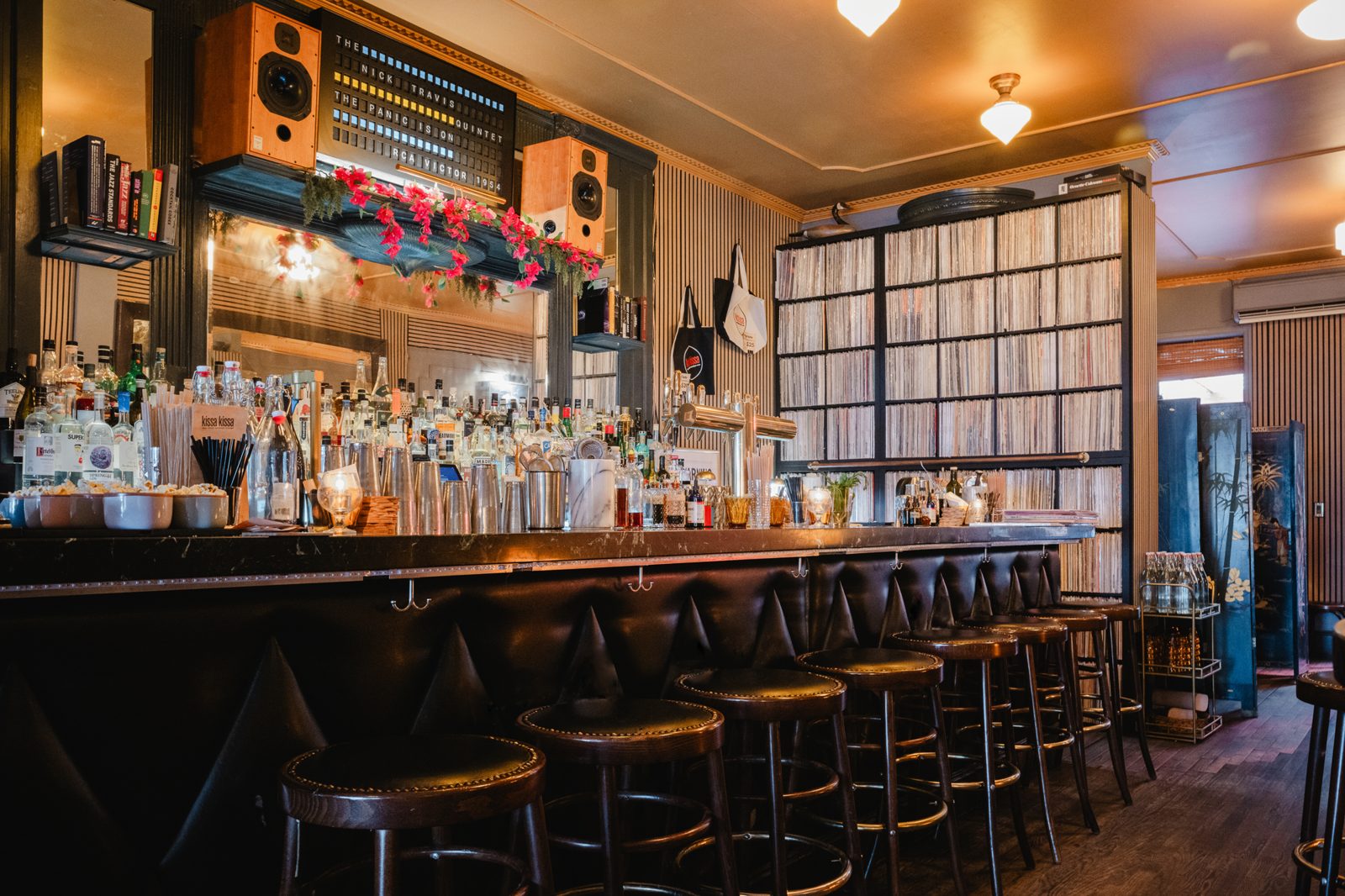
On Listening Nights the room plays full album sides front to back, with low voices at the bar. The rest of the week it gets more social, with the same records on the same system.
Hear it at 667 Franklin Avenue
Doors at 5:30 PM Monday through Thursday, 5:00 PM Friday and Saturday, and 3:00 PM Sunday. Crown Heights, Brooklyn.
Our upcoming listings have what’s playing, and Verve Mondays runs every week. Thanks to Ortofon for the cartridges.
Come listen
667 Franklin Avenue · Crown Heights, Brooklyn
No cover. No reservations required but always encouraged.