
After Midnight, three days early
Cole made After Midnight with a small group and a different guest at each session
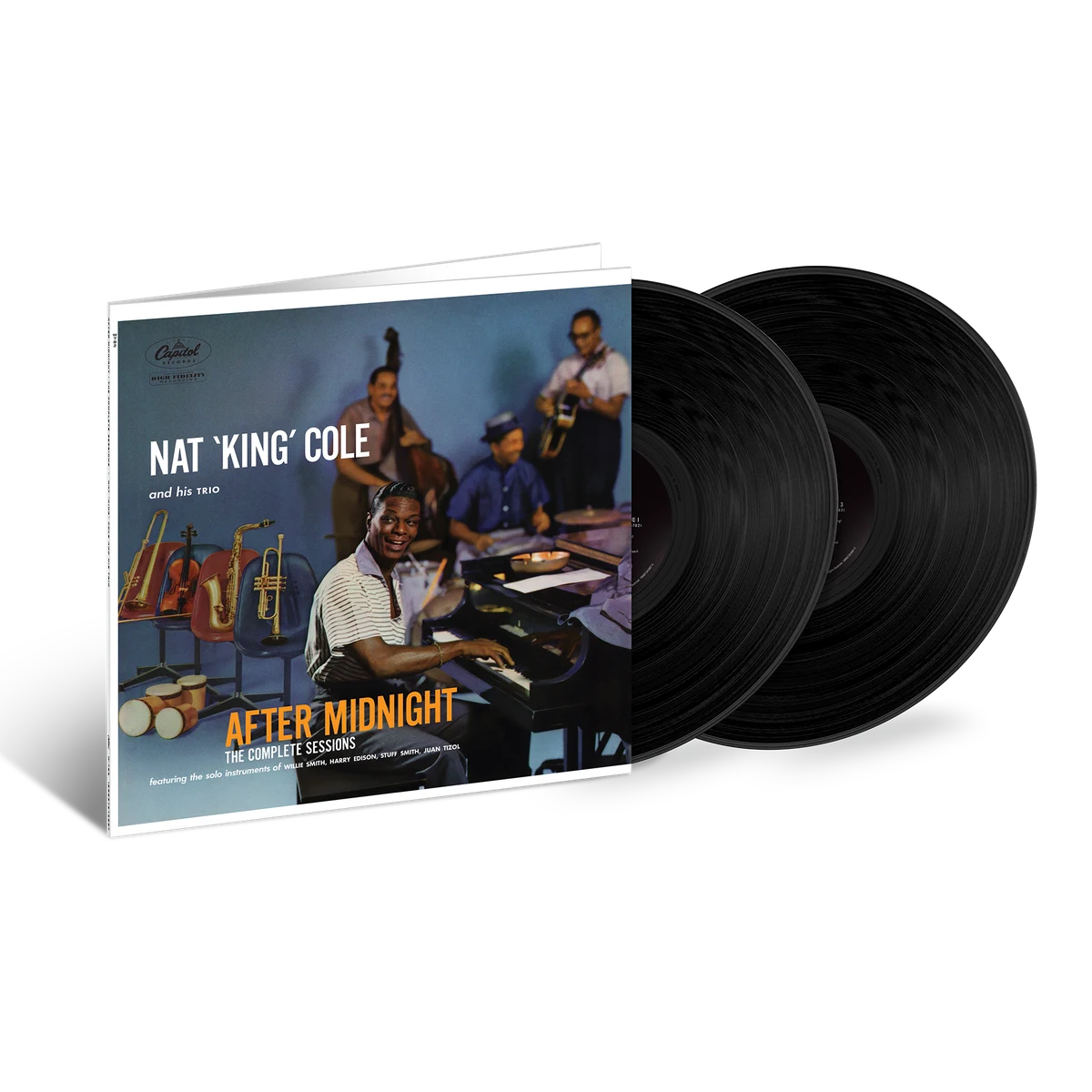
Nat King Cole recorded After Midnight at Capitol Studios in Hollywood across four sessions between August 15th and September 24th, 1956, with John Collins on guitar, Charlie Harris on bass and Lee Young on drums. Harry “Sweets” Edison brought his trumpet to the first session, Willie Smith his alto saxophone to the second, Juan Tizol his valve trombone to the third and Stuff Smith his violin to the last. Capitol released twelve of the songs in 1957. Gordon Jack, writing in Jazz Journal, called it a “welcome return to his jazz roots.”
Will Friedwald, the Cole biographer behind Straighten Up and Fly Right, wrote the essay for the Tone Poet edition. He ranks After Midnight “one of the great jazz vocal albums of all time” and hears Cole playing and singing “like a man on a lark.” His piano playing, Friedwald adds, “is just as good on After Midnight.”
The Tone Poet After Midnight puts Capitol’s running order first, then everything it left off
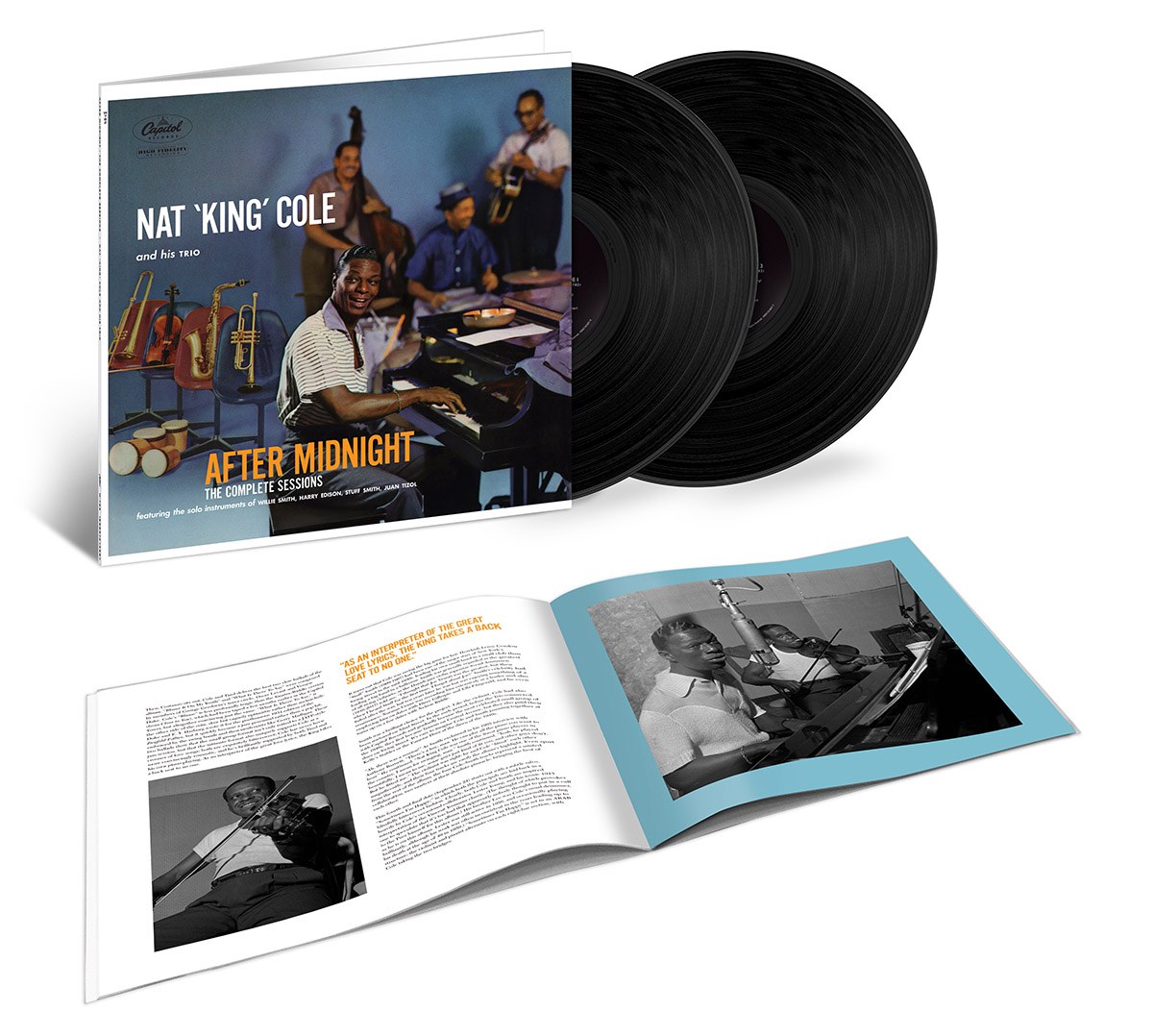
A 1987 CD added five more songs from the same four sessions, and Blue Note’s Tone Poet edition keeps all seventeen plus an alternate take of “You’re Looking at Me.” Sides one and two hold the first ten songs of the original album in their original order. Its last two, “When I Grow Too Old to Dream” and “Route 66,” open side three, and the rest of the second LP is the music that didn’t make the 1957 record.
At least one song from every session was left off, Stuff Smith’s “Two Loves Have I” among them. For those five songs alone, the reissue beats an original pressing.
Joe Harley produced the reissue. Kevin Gray mastered it from the original analog tapes, and Record Technology Inc. pressed it on 180-gram vinyl, in mono. It comes in a tip-on gatefold jacket, with Friedwald’s essay and archival photographs in the booklet. Blue Note timed it to the album’s 70th anniversary, and it’s out November 13th.
All four After Midnight guests turn up in the first four songs
Side one runs Willie Smith, Edison, Stuff Smith, Tizol. Here’s who plays on what.
The Edison date re-cuts three trio staples: “Sweet Lorraine,” “It’s Only a Paper Moon” and “Route 66.” “In the Trio, the interplay was the thing,” Friedwald writes. Here it’s Edison’s muted trumpet, which Tony Augarde, writing for MusicWeb, called a “perfect foil.”
Gordon Jack called Willie Smith “a most elegant soloist” on “You’re Looking at Me” and found Tizol’s solos “rather pedestrian.” Tizol co-wrote “Caravan” with Duke Ellington, so hear his version, with Jack Costanzo on bongos, before you side with Jazz Journal.
If we had to keep one session, it would be Stuff Smith’s. Augarde called him “gloriously frenetic” on “I Know That You Know,” and by Augarde’s account Smith takes “Two Loves Have I” toward gypsy jazz. Be patient, though: that one doesn’t turn up until side four.
Very Friendly is selling records in the room, and Blue Note is sending pins

On Tuesday, November 10th, from 7:00 PM, we play an advance copy of the Tone Poet After Midnight on our sound system, all four sides, three days before it’s in stores. Blue Note (@bluenoterecords) has confirmed it as the first in our new series of Tone Poet nights. Side one opens on “Just You, Just Me,” which Augarde called “a virtually perfect track.”
Very Friendly, the new independent record store in Prospect Heights (@veryfriendly.nyc), is popping up in the room with records for sale, so you can leave with more than After Midnight in your head. Blue Note is sending custom lapel pins, and we’re giving them away on the night.
Tuesday, November 10th
Doors at 5:30 PM, with side one at 7:00 PM. Free and open to the public, typically 21+. 667 Franklin Avenue, Crown Heights.
The rest of November is on our upcoming listings.
Come listen
667 Franklin Avenue · Crown Heights, Brooklyn
No cover. No reservations required but always encouraged.