
At the Lighthouse
Three nights at the Lighthouse left one record
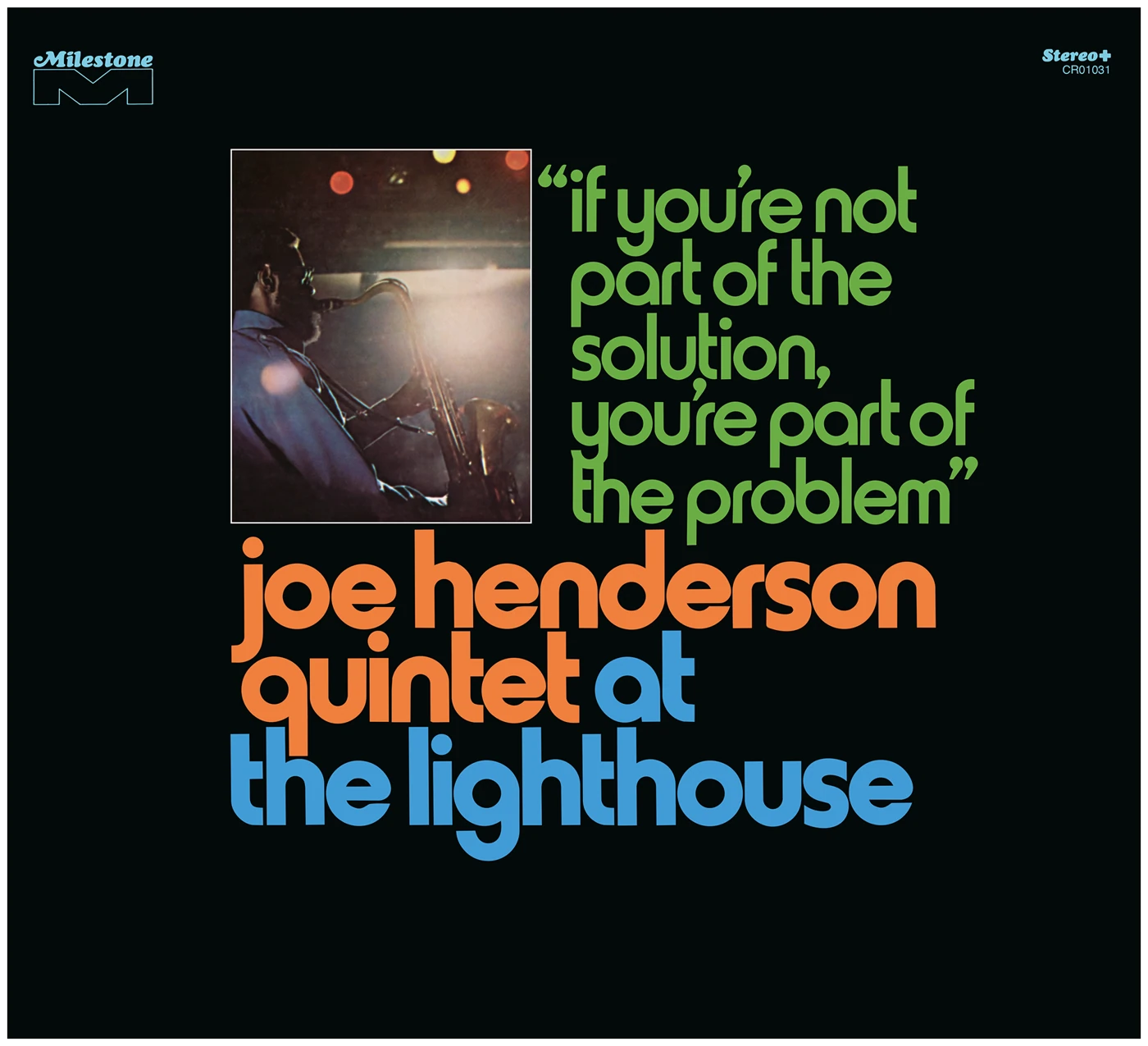
In late September 1970, Joe Henderson brought a quintet into the Lighthouse, the jazz club in Hermosa Beach, California. Milestone recorded three nights of it, with Orrin Keepnews producing. The label put six performances on an LP that November. Its title came from Eldridge Cleaver: If You’re Not Part of the Solution, You’re Part of the Problem. It was Henderson’s first live album as a leader. The band worked the U.S. and Canada for about a year afterward, and Craft calls this the only recording it ever made.
Down Beat gave it three and a half stars in 1971, and AllMusic’s Scott Yanow gave it four. The Penguin Guide to Jazz called it “one of the most fondly remembered Henderson albums of the period.” We agree, and four more sides only make the case stronger.
Craft Recordings has gone back to those nights for a deluxe edition. On vinyl it runs to three LPs with five previously unissued performances. The CD and digital editions carry twelve unissued selections. The set is out November 20th. Craft sent us an advance copy, so on Sunday, November 15th, five days early, we’re playing all six sides. Five unissued performances from a band that recorded only once is reason enough to give it a whole evening.
Three LPs is the right size for a band that stretches out
Milestone’s LP ran 45 minutes, and its longest piece, the title track, runs 11:29. Tunes that long fill a side fast, and this set gives the band sixteen tracks across six sides. Every format is mastered from the original analog tapes, and the unreleased material was mixed from the original four-track masters. The LPs are 180-gram, pressed at Fidelity, in a triple-gatefold jacket.
Eugene Holley Jr. wrote the new liner notes. He writes that Henderson’s sound is “solid, like a laser, slicing through clichéd post-bop.” John Koenig, who assisted on the original recording, adds his own recollections of the run. “In front of a crowd, he was a master.”
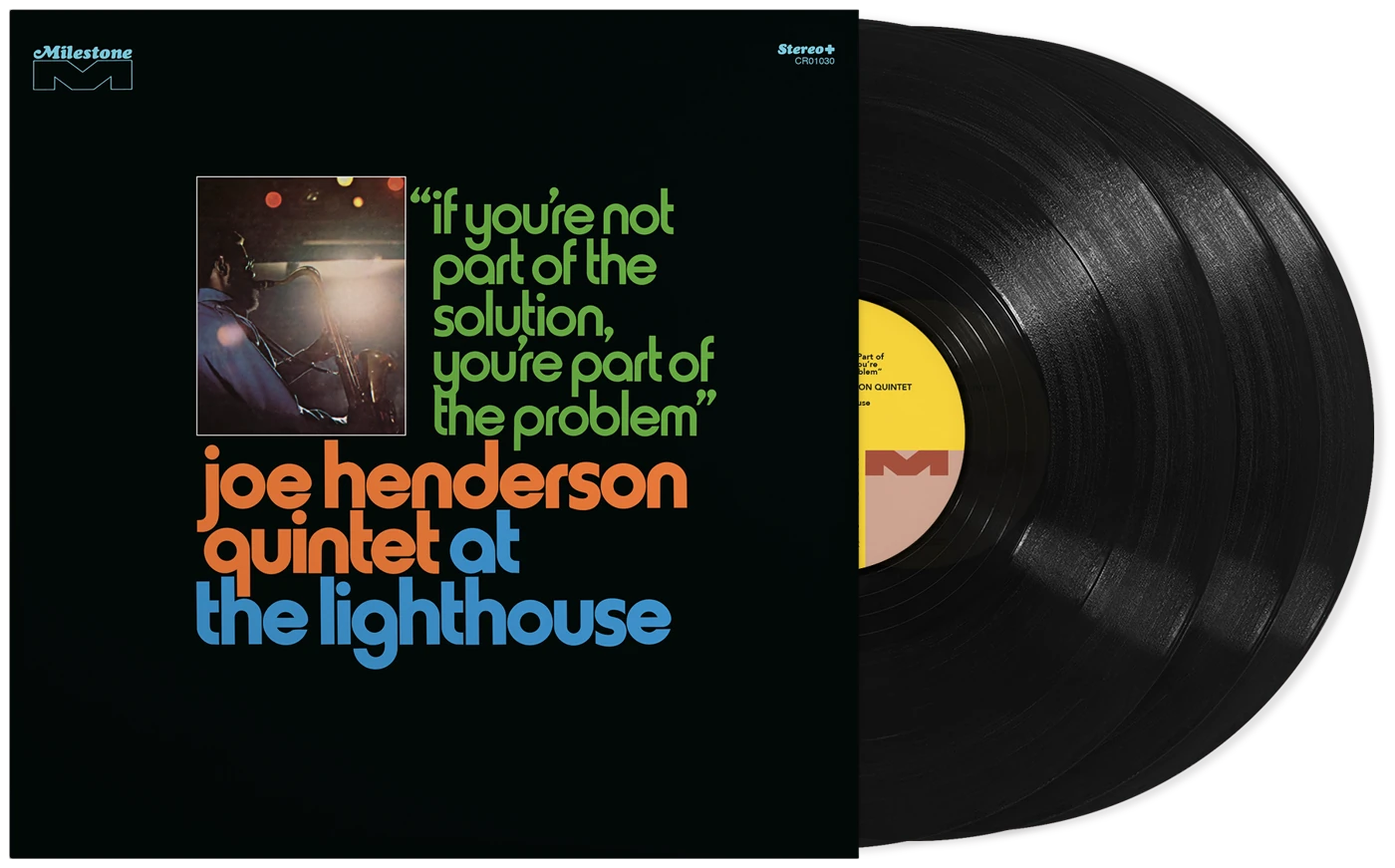
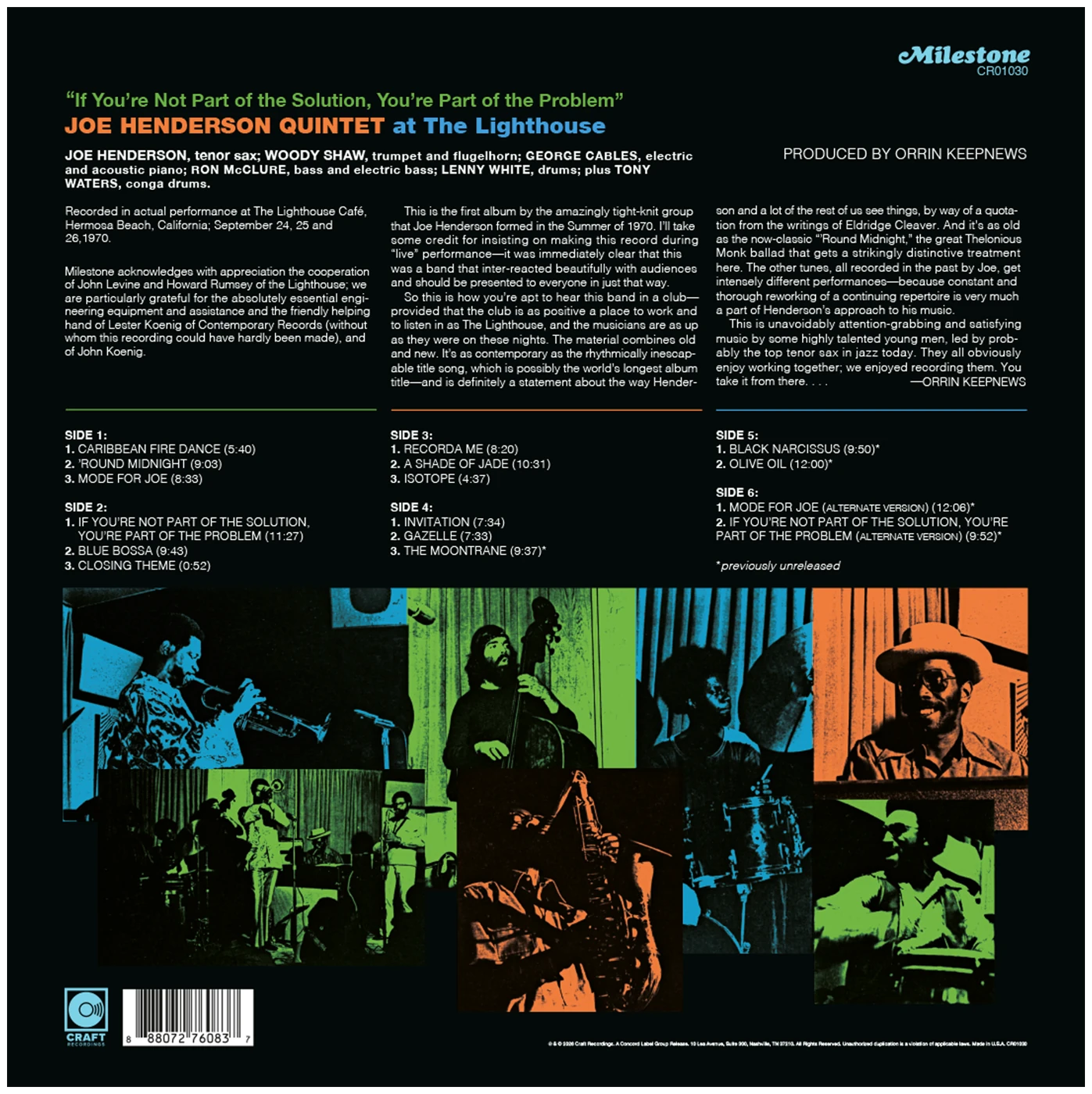
Product images courtesy of Craft Recordings.
A Blue Note band at the Lighthouse, with the plug in
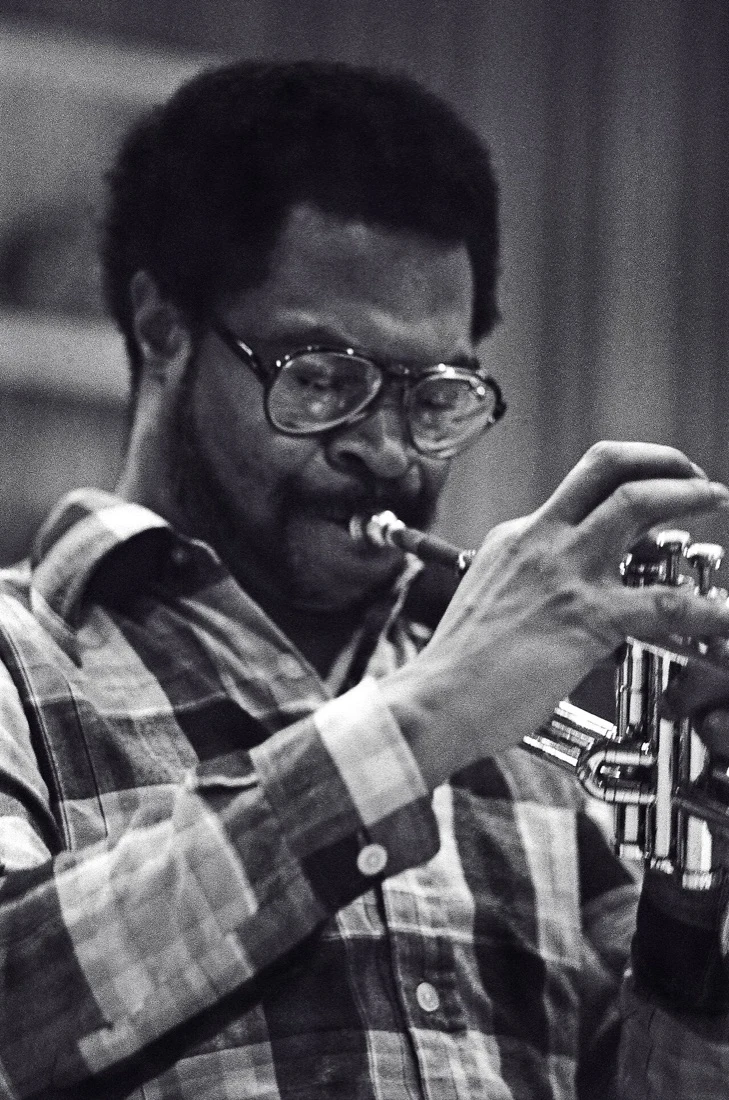
Henderson plays tenor, with Woody Shaw beside him on trumpet and flugelhorn. George Cables plays electric piano, Ron McClure is on bass and Lenny White is on drums. Tony Waters adds congas on some of the performances.
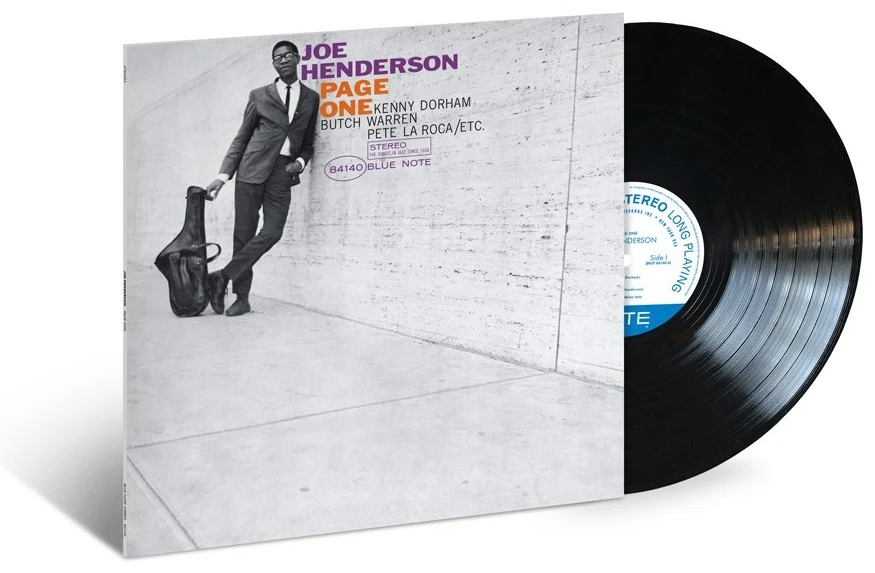
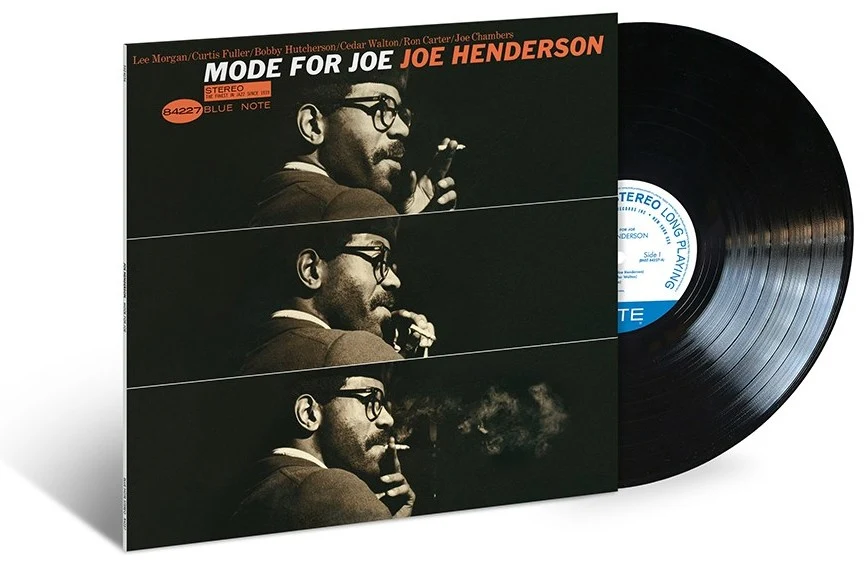
The easy label for this band is fusion. We’d call it a Blue Note band with the plug in. Half the tracks on the first two LPs are tunes from Henderson’s own Blue Note albums of 1963 to 1966. “Blue Bossa” and “Recorda Me” were on Page One, “Isotope” on Inner Urge, and “Caribbean Fire Dance,” “A Shade of Jade” and “Mode for Joe” on Mode for Joe. Monk’s “’Round Midnight” and Bronisław Kaper’s “Invitation” are here too.
What changed is the instruments. Cables is on electric piano, and McClure is credited on electric bass as well as double bass. Lenny White had played on Miles Davis’s Bitches Brew the year before.
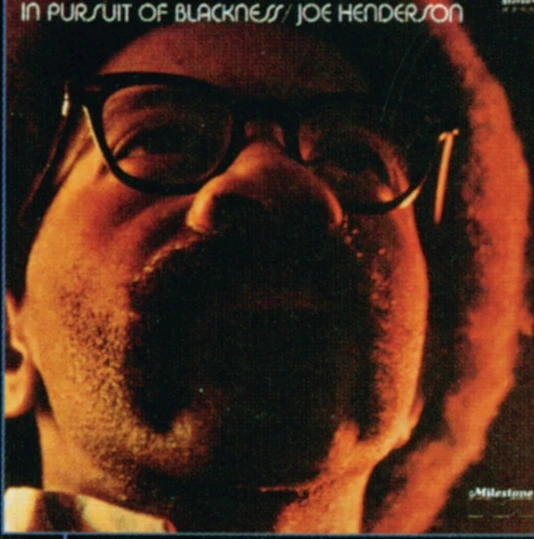
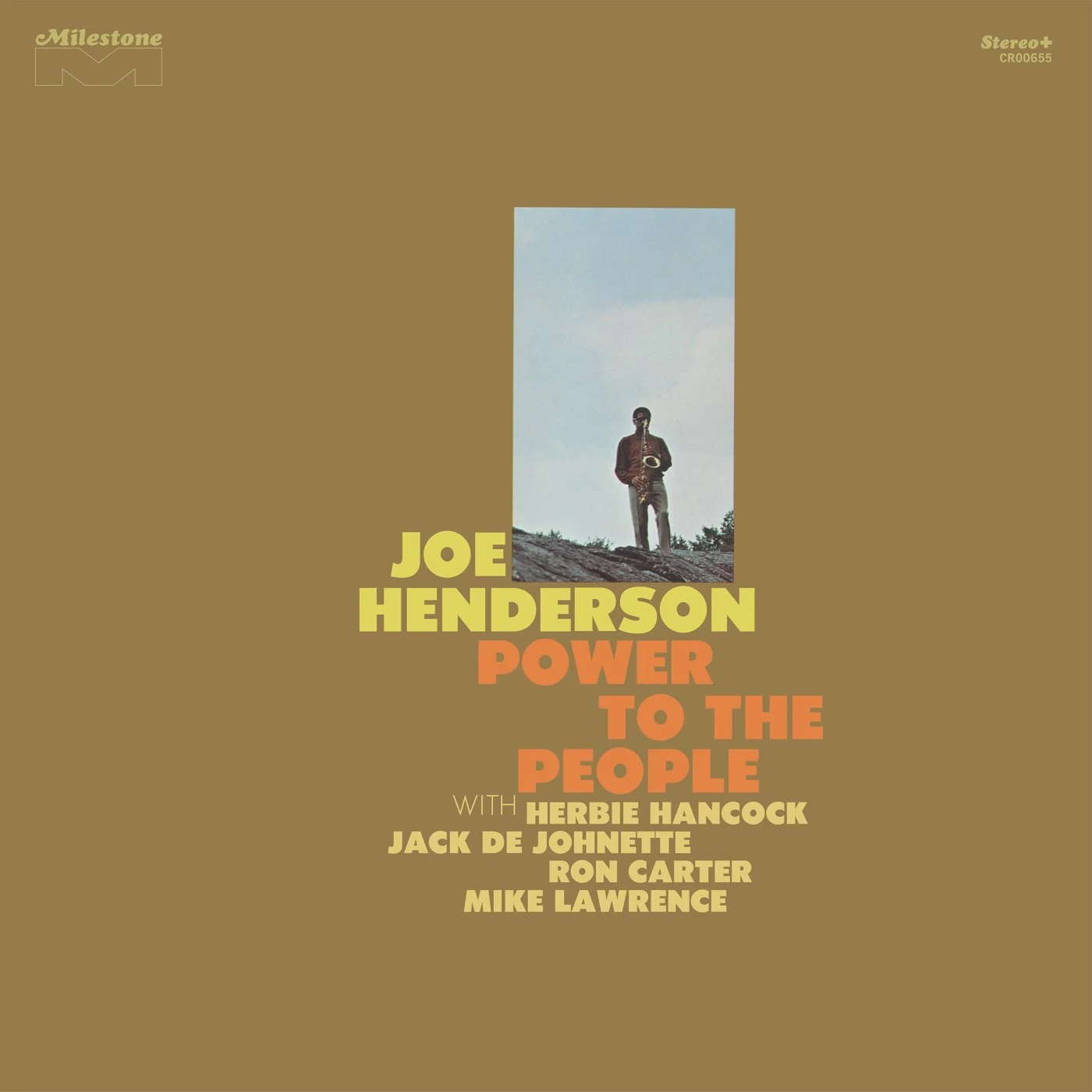
On Power to the People, in May 1969, Herbie Hancock played Fender Rhodes on “Black Narcissus” and two other tracks, the first electric piano on a Henderson album. A new “Black Narcissus,” taped sixteen months later with Cables in the keyboard chair, is on side E. Its place there is the sharpest bit of programming in the set.
Shaw wrote “The Moontrane” at 18, as a dedication to Coltrane. Henderson had played it before, on Larry Young’s Unity for Blue Note. That session, on November 10th, 1965, also had Shaw and Elvin Jones. The unissued Lighthouse version is two players coming back to a tune they already shared. Craft put it out as a single when the set was announced, and it’s streaming now.
The sides run in the order the music came out
Sides A and B are the album as Milestone issued it in November 1970. Side C holds three of the four tunes added on the 2004 reissue titled At the Lighthouse. Side D opens with the fourth, “Invitation,” then “Gazelle,” and Milestone had already put both of those out in 1971 on In Pursuit of Blackness. It ends on “The Moontrane.” Sides E and F were never out at all.
Roughly, the records follow the order the music reached the public: 1970, then 1971 and 2004, then now. You’re hearing one club engagement that came out in installments over fifty-six years.
“Blue Bossa” is Kenny Dorham’s tune, and Dorham was the trumpeter beside Henderson on Page One in 1963. Now Shaw is in that chair, so listen for what he does with it. Yanow singled out this remake and the one of “Mode for Joe.”
The seam comes at the end of side D. Up to “Gazelle,” you may own all of it already. With “The Moontrane,” the set reaches music that was never issued, and side E is where it turns from the old book to the new.
Side F is for the already converted, with alternate takes of “Mode for Joe” and the title piece. A Sunday night is where the converted gather. We’d stay.
A club record like At the Lighthouse belongs in a listening room
We open at 3:00 PM as usual, and side A goes on around 7:00, then we play straight through to side F. Our sound system was built for records like these, and a jazz kissa is a room where you come to hear them rather than talk over them.
The Lighthouse had been a jazz room since May 29th, 1949, when Howard Rumsey started a Sunday jam session there. By 1970 Cannonball Adderley, the Jazz Crusaders, the Modern Jazz Quartet and Lee Morgan had all made live albums in the room. Henderson’s record was made in a club, and we’d rather play it in something like one. Pieces that run eleven minutes want a room where nobody’s reaching for a phone.
This Sunday’s listen is on our upcoming listings.
Sunday, November 15th
Doors at 3:00 PM; side A goes on around 7:00 PM. Free and open to the public, typically 21+. 667 Franklin Avenue, Crown Heights.
Come listen
667 Franklin Avenue · Crown Heights, Brooklyn
No cover. No reservations required but always encouraged.