
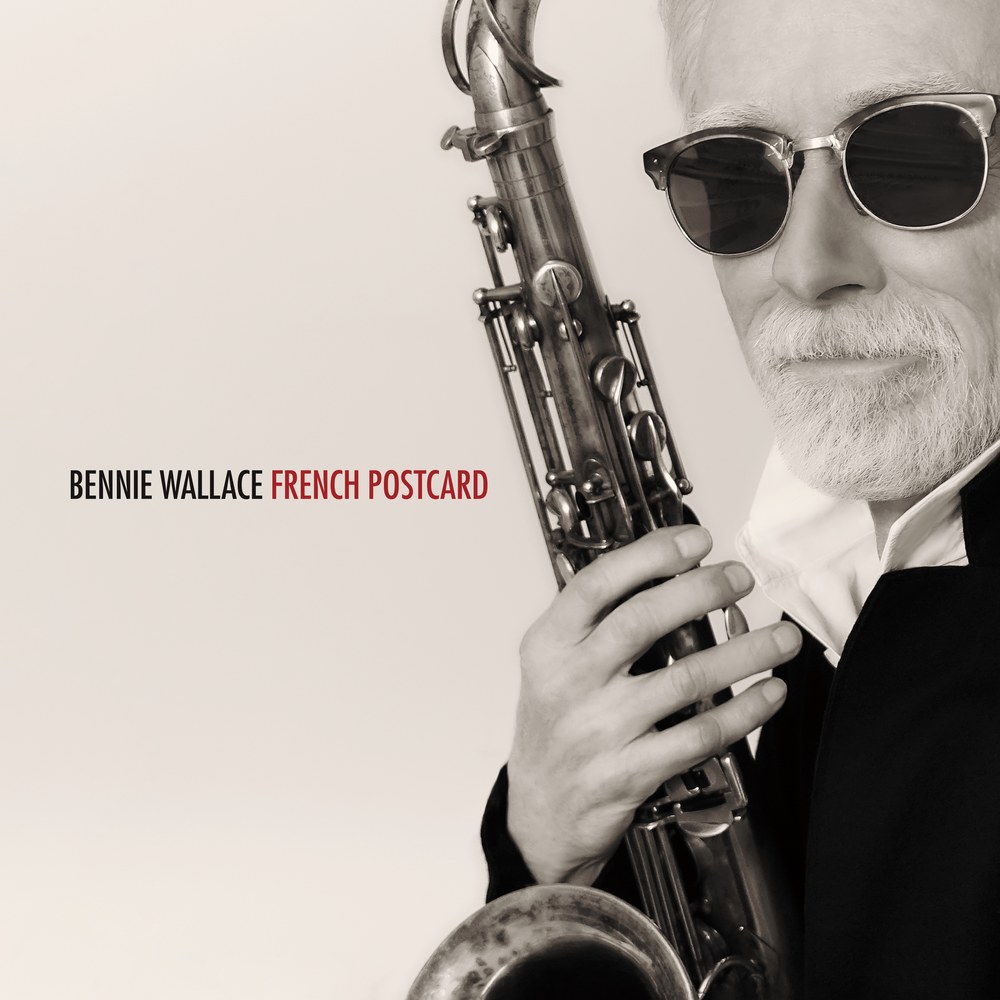
Bennie Wallace Plays French Postcard
There is a moment on every record where somebody decides how much reality to keep. Most modern sessions keep very little. You track the drums on Tuesday, the horn on Thursday, and if the tenor player fluffs one note in an otherwise perfect take, you fix that note and nobody is the wiser.
Bennie Wallace did not do that. French Postcard was recorded straight to two-track analog tape at Sear Sound in New York on December 10 and 12, 2024. Six musicians in one room, playing at the same time, with no overdubs and no edits. What you hear is what happened, mistakes and breathing and all.
On Tuesday, September 8th, we are going to play that record start to finish on our system. And then Bennie Wallace is going to walk out onto our back patio and play it again, live, with the bassist who is on it.
Why the recording matters
Direct-to-two-track means there is no multitrack tape and no mixing session afterward. The balance you hear was set in the room, before anyone played a note, by where the microphones went and how loud each musician chose to be. Get it wrong and you start over. There is no fixing it later, because there are no separate tracks to fix.
The engineer was James Farber, who has been doing live-to-two-track dates with Wallace since the 1980s. Mastering was by Kevin Gray at Cohearent Audio, a name that turns up on a great many of the audiophile reissues that jazz collectors chase. It was pressed on 180-gram vinyl at RTI.
And it was produced by Joe Harley, which is the detail that made us want to host this evening. Harley is the producer behind Blue Note’s Tone Poet series, the reissue program responsible for a good number of the best-sounding records on our shelves. He is also, as Wallace writes in the liner notes, the man who has produced every record Wallace has made since the early 1990s, when they started working together at AudioQuest Music. Wallace calls him his sound guru, corner man and psychiatrist, and notes that Harley once produced a record while recovering from open-heart surgery.

Six musicians in one room at Sear Sound, playing at the same time, straight to two-track tape. What you hear is what happened.
Bennie Wallace
Wallace was born in Chattanooga and moved to New York in 1971. He has spent five decades building a tenor style that does not sit neatly anywhere. The raspy, vocalized warmth in his tone comes out of Ben Webster and Coleman Hawkins. The intervals he jumps come out of somewhere much further out, closer to Eric Dolphy. He will play a phrase that sounds like 1938 and land it somewhere that sounds like 1968, and the join is seamless.
He has long been recognized internationally as one of the most distinctive tenor saxophone voices in jazz. His albums for Blue Note, Enja, Denon and AudioQuest have earned him worldwide acclaim. He is not a nostalgia act and this is not a tribute record.
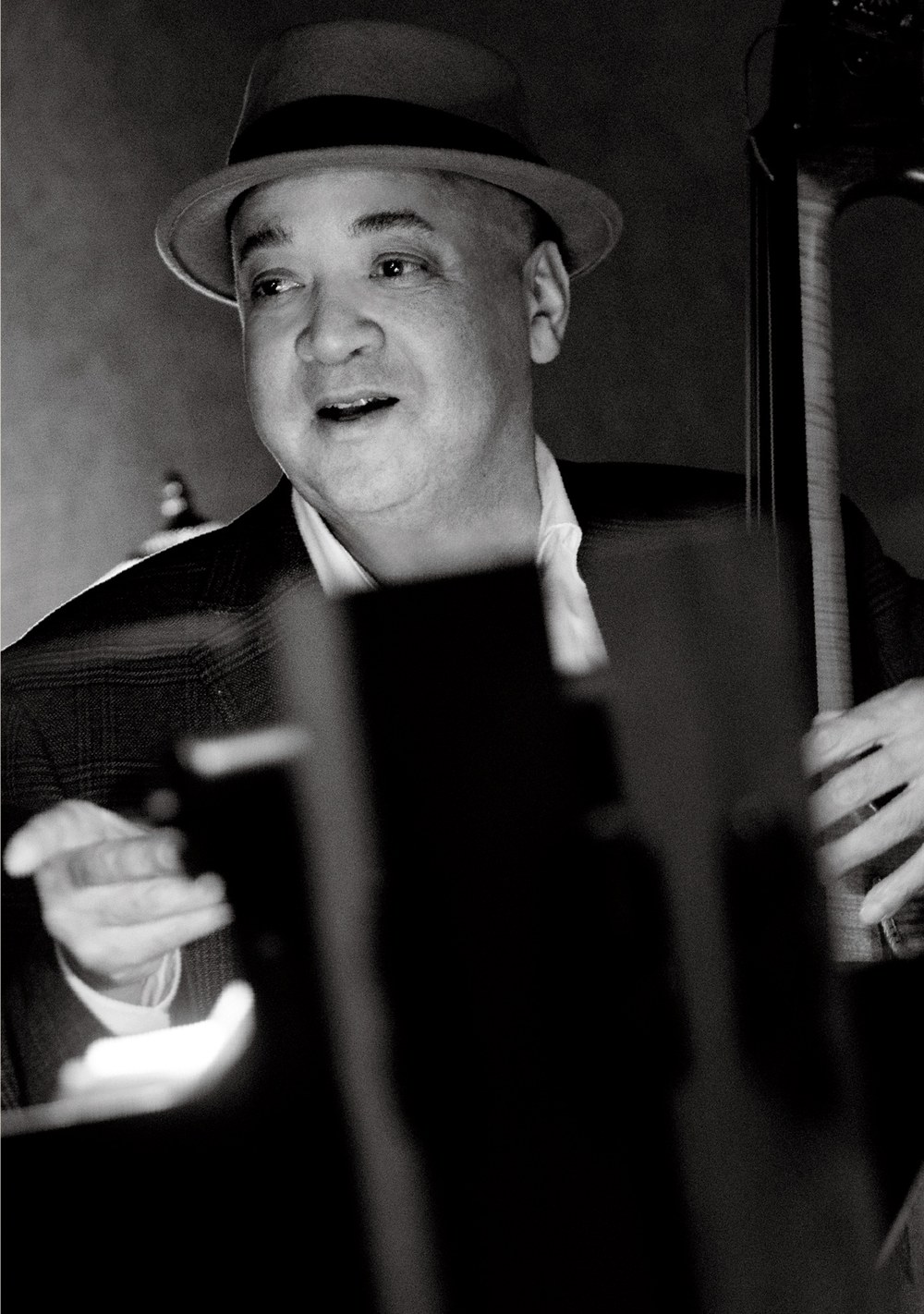
Peter Washington
Peter Washington joined Art Blakey and the Jazz Messengers in 1986 and moved to New York, which is roughly when he became the bassist everyone calls. He spent the nineties in the Tommy Flanagan Trio until Flanagan’s death, and he has been in the Bill Charlap Trio since 1997. He has played on hundreds of records, by some counts approaching five hundred, which may make him the most recorded bassist of his generation.
He plays on French Postcard, and he is the one coming to Brooklyn with Wallace. When they play on the patio, you will be hearing two-thirds of a rhythm section that has been working together, in one configuration or another, for decades.
Everybody in one room
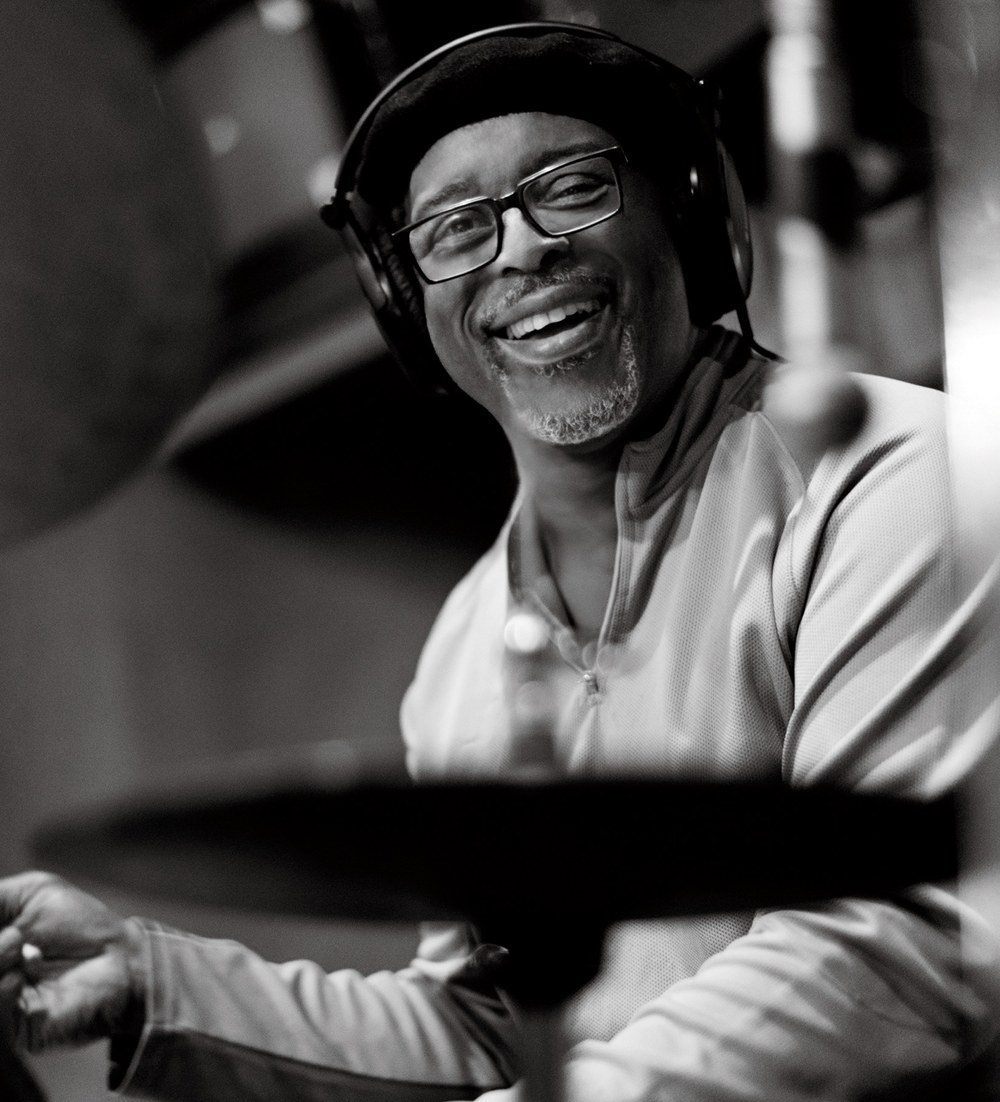
The rest of the sextet is worth naming, because on a live-to-tape date every one of them is load-bearing. Anthony Wilson on guitar, Simon Moullier on vibraphone, Donald Vega on piano, and Herlin Riley on drums, whose New Orleans time feel is the engine underneath most of this record.
Wallace has known most of them for decades. Moullier is the newcomer. Much of the material was worked out at BackCountry Jazz concerts before anyone booked a studio, which is part of why a record made in two days sounds this settled.
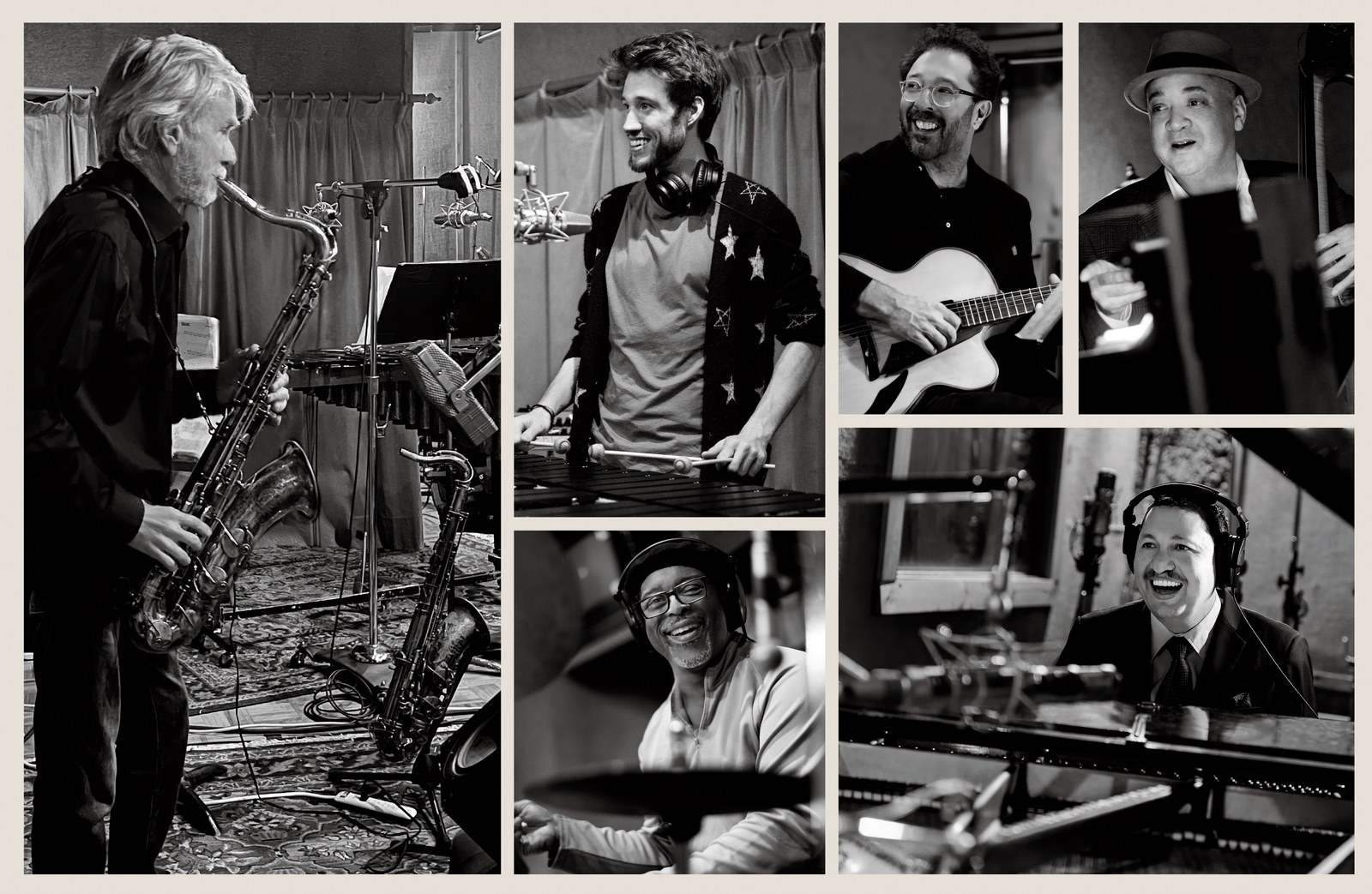
The session at Sear Sound, December 2024. Photographs from the album’s gatefold.
What’s on it
Eight tracks, and the program is broader than you might expect. It opens with “Joshua Fit the Battle of Jericho,” the spiritual, taken as a piece of gospel-blues swing. There are two Jobim tunes, “How Insensitive” and “Desafinado.” There is “Tennessee Waltz,” which Wallace grew up with, and “These Foolish Things,” and a reading of “‘Round Midnight” to close. Two are his own, “Srubie” and “Handcuffs.”
Wallace ends his liner note this way: all the music you will hear on this record is as it was played, everybody in the room, playing live to analog tape, no edits. So, set your clock back to 1958, and I hope you enjoy this French Postcard.
It is out on BackCountry Jazz, a nonprofit label founded by Wallace. Sales support its music education and artistic programs.
How the night works
We will play French Postcard front to back on the house system first. Our sound system was built for records made this way, and a jazz kissa is a room where the music is the event rather than the background to it. A record cut with no edits deserves to be heard without any either.
Then Bennie and Peter play live on our covered back patio. It is an acoustic set, no amplification, which is the same proposition as the record: two musicians and a room, and whatever happens is what you get.
Vinyl will be for sale, and both of them will be signing.
Tuesday, September 8th
Doors at 5:30 PM, music at 7:00 PM. Free and open to the public, no cover and no ticket. The record plays first, the live set follows.
667 Franklin Avenue, Crown Heights. If this is your kind of evening, our Verve Mondays series runs every week.
Come listen
667 Franklin Avenue · Crown Heights, Brooklyn
No cover. No reservations required but always encouraged.