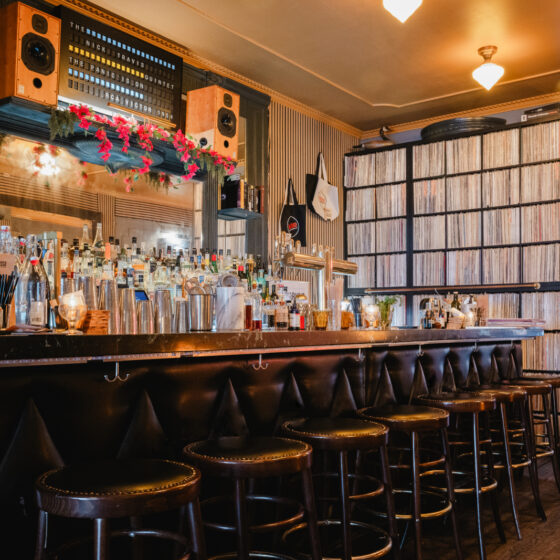


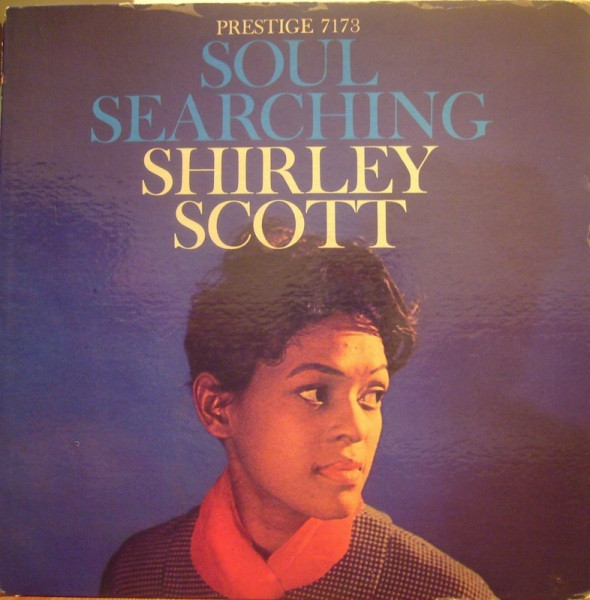
Kissa Kissa owns 20 Shirley Scott records. More than Miles Davis. More than John Coltrane. Her portrait hangs on our wall — painted by Nina Barry from the cover of Soul Searching, her 1959 debut on Prestige. And if you walked into most jazz conversations in America and said her name, you’d get a blank stare.
That’s the crime this post is about. Not that Shirley Scott was overlooked — though she was. The crime is that she was one of the most prolific, inventive, and deeply soulful musicians in the history of jazz, and the instrument she played has been treated as a footnote to the tradition rather than one of its most expressive voices.
Scott recorded 23 albums for Prestige Records alone between 1958 and 1964 — a six-year run of creativity so relentless it borders on absurd. She cut sessions for Impulse!, Blue Note, Atlantic, Cadet, and Strata East. Over four decades, she appeared on more than 50 records. And she did all of it from Philadelphia, the city where she was born in 1934 and where she died in 2002, four days before her 68th birthday.

Shirley Scott, circa late 1950s. Photo: Gilles Petard / Redferns / Getty Images.
A Club Owner Needed an Organist. She Said Yes.
Scott grew up in a household where jazz was the air you breathed. Her father ran a jazz club — part speakeasy, part living room — in the basement of the family home. She started piano at eight, moved to trumpet in high school on a scholarship, and seemed destined for a conventional path. Then a club owner needed someone to fill the organ bench, and Shirley Scott sat down at a Hammond B3 for the first time.
She crafted a signature sound almost immediately. Where Jimmy Smith attacked the B3 with a kind of volcanic intensity — all pedals and tremolo and sheer force — Scott approached it like a pianist who happened to have a 400-pound instrument at her disposal. Her touch was lighter, more lyrical, shaped by the bebop harmonies she’d absorbed growing up in Philly. She mixed the gospel and blues sound that made the organ popular in jazz clubs with something more intricate and technically daring. Trumpeter Terell Stafford remembered her perfectly: “She was so sweet and gentle, and she loved to laugh. Harmonically she was really advanced, but most of all, whenever she played it always felt good.”
That phrase — it always felt good — is the key to understanding her entire career.
Lockjaw, the Cookbook, and the Lights on the Organ
In 1955, tenor saxophonist Eddie “Lockjaw” Davis hired Scott as his organist. It was one of those partnerships that rewires both musicians. Together, they recorded the Cookbook trilogy for Prestige — three albums of hard-swinging organ-and-tenor soul jazz that became templates for the genre. The chemistry was immediate and combustible: Davis’s big, chesty tenor sailing over Scott’s churning, bluesy organ lines.
Davis did something unusual to promote his organist. He hung lights on the organ so the audience could watch Scott’s pedal work — her feet moving across the bass pedals with the fluency of a second pair of hands. Scott was unimpressed. She was, as she put it, “only interested in playing.” She didn’t want the spectacle. She wanted the music. The tension between those two impulses — between showmanship and artistry, between fame and craft — would define her entire career.
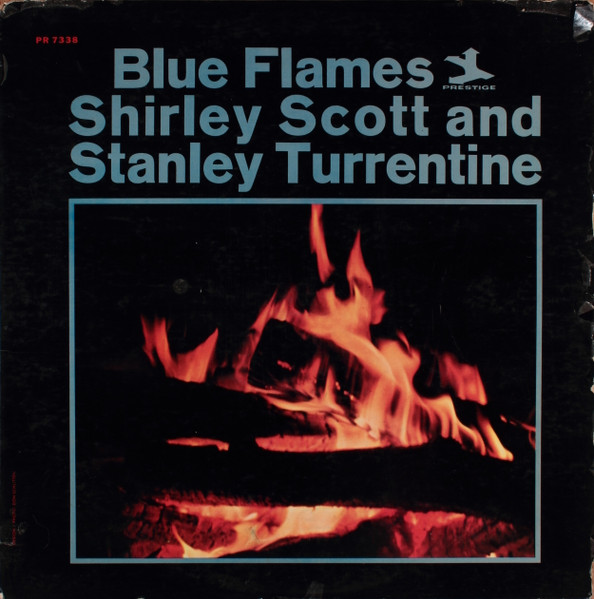
Kissa Kissa owns all three volumes of the Cookbook series, plus the Best of Eddie “Lockjaw” Davis with Shirley Scott compilations on both Prestige and Bethlehem. When you hear these records on our Harbeth and McIntosh system, the interplay between the two musicians is startlingly present — Davis right there in the room, Scott’s organ filling every corner of the space.

Shirley Scott, early 1960s.
23 Albums in Six Years
The Prestige years are staggering in their volume and consistency. Between 1958 and 1964, Scott recorded constantly — at Rudy Van Gelder’s studio in Hackensack, New Jersey, often in single-day sessions that produced entire albums. Soul Searching came in 1959 and announced her as a leader with authority. Great Scott! followed the same year, recorded at Van Gelder’s on May 23, 1958 — a different mood entirely, brighter and more playful. Hip Soul in 1961 was peak form: tight, swinging, irresistible.
She also married tenor saxophonist Stanley Turrentine in 1960, and their musical partnership — captured on records like Blue Flames — came to redefine the Hammond B3’s groove as something sensualist, emotional, and even more aggressively rhythmic than it had been. Where the Lockjaw sessions were all hard-swinging funk, the Turrentine records were warmer, more romantic. Together they made the organ sound less heavy and more heavenly.
Other highlights from those years: Scottie Plays the Duke, which took Ellington’s songbook through the B3 and proved Scott could handle sophistication without losing her swing. The Soul Is Willing, a 1963 date that showcased her as a bandleader and arranger. Satin Doll, which paired her with Don Patterson on a second organ — two B3s in the same room, filling Van Gelder’s studio with a sound so thick you could stand in it.
The Most Underrated Corner of Jazz
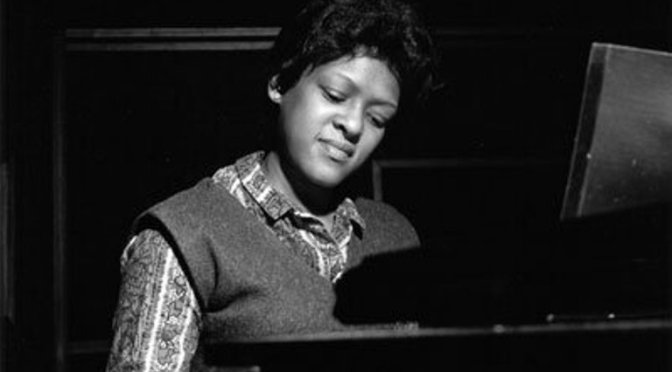
Scott at the keys. Photo: PhillyJazz.us.
Kissa Kissa owns more than 130 Hammond B3 records — 31 by Brother Jack McDuff, 24 by Don Patterson, 19 by Shirley Scott, 17 by Johnny Hammond, 16 by Groove Holmes, 15 by Jimmy Smith. The organ jazz tradition is one of the deepest wells in our collection. And Scott is, for our money, its most underrated practitioner.
The reasons she’s less famous than Smith or McDuff are exactly the reasons she should be more famous. She never chased the spotlight. She stayed in Philadelphia, teaching at Cheyney University and playing at Ortlieb’s Jazzhaus instead of touring relentlessly for national exposure. She preferred the music to the machinery of promotion. And she was a woman playing an instrument that the jazz world — and the music press — had coded as male. When liner notes described her as doing “a man-sized job,” the compliment revealed the bias.
Her last studio recording, A Walkin’ Thing, came in 1992. But a remarkable live recording from 1972 — Queen Talk: Live at the Left Bank — was released in 2023 on the Reel to Real label, and it’s a revelation. Scott at the peak of her powers, in front of an audience, playing with the kind of relaxed authority that only comes from thousands of nights at the bench. We own it, naturally.
On the Wall, On the System, In the Room
Shirley Scott is one of six artists whose portraits hang on the walls at Kissa Kissa, each painted by co-founder Nina Barry. The others are Jutta Hipp, Andrew Hill, Barry Harris, Toshiko Akiyoshi, and Randy Weston. Of those six, Scott is the most deeply represented in our record collection — 20 records and counting.
Nina’s painting is based on the Soul Searching cover. It hangs in the main listening room. And on any given night, you can hear the music it represents — the record itself, or one of its 19 siblings — played on the system at a volume and fidelity that lets you hear everything: the warmth of the Leslie speaker, the thump of the bass pedals, the way Scott’s left hand anchored the groove while her right hand told the story.
In a jazz kissa, the listening is the point. The music isn’t background — it’s the reason you came. And there’s something fitting about Shirley Scott being the patron saint of a place like this. She was a musician who was only interested in playing. She wanted the music to speak for itself. At Kissa Kissa, it does.
Come Hear the Queen
667 Franklin Avenue · Crown Heights, Brooklyn
No cover. No reservations required — but always encouraged.