LISTEN TO THE EPISODE
Most pianists pick a lane — stride or bebop, free jazz or standards. Jaki Byard played all of them, sometimes inside the same solo, and his trio debut Here’s Jaki cycles through so many styles it almost feels like a dare. A calypso in five-four time. Coltrane’s hardest chord sequence dispatched in under two and a half minutes. A ten-minute Gershwin medley that drifts from lush balladry into something rhythmically unpredictable. All cut in a single session at Van Gelder’s studio with Ron Carter on bass and Roy Haynes on drums.
In this episode of Deep in the Stacks, we follow Byard through seven tracks that cover more ground than most artists manage in a career — and listen to what happens when a pianist who refuses to specialize finds a rhythm section that can keep up every step of the way.
THE RECORD

ABOUT THE ARTIST
Jaki Byard
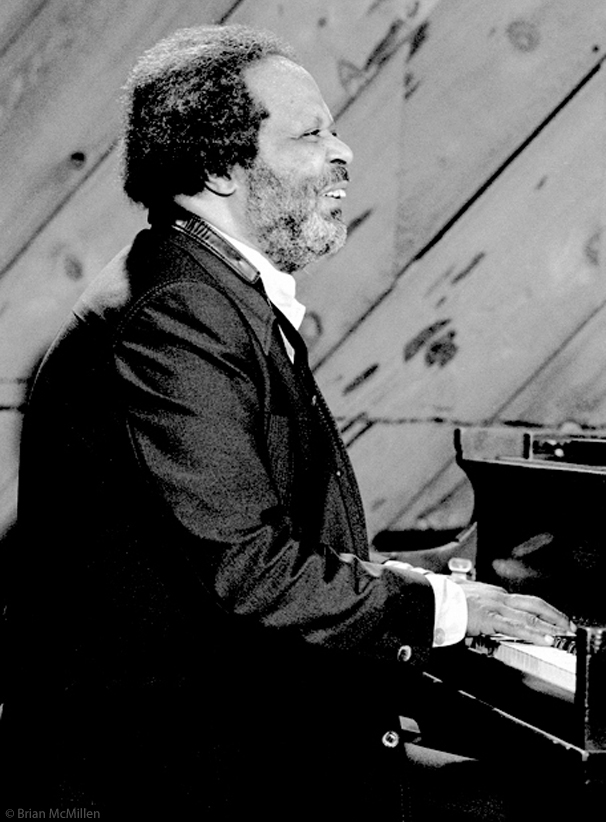
Jaki Byard (1922–1999) was one of the most stylistically wide-ranging pianists in jazz — a musician who could summon stride, bebop, free improvisation, and everything in between, sometimes within a single chorus. After years working in Boston’s jazz scene and touring with Herb Pomeroy’s big band, Byard caught the attention of Charles Mingus, who hired him for some of the bassist’s most ambitious recordings. Byard’s piano is central to Mingus Ah Um (1959), and he remained a key member of the Mingus groups through the mid-1960s. His own leader dates for Prestige and New Jazz — including Hi-Fly (1962) and Here’s Jaki (1961) — showcase a pianist who refused to be pinned to any single tradition.
As a sideman, Byard appeared alongside Eric Dolphy on Out to Lunch (1964) and recorded with Rahsaan Roland Kirk, Booker Ervin, and Sam Rivers. He was also a dedicated educator, teaching at the New England Conservatory for decades and shaping the next generation of jazz musicians. His playing on Here’s Jaki — darting from a Gershwin medley to “Giant Steps” to calypso — is the perfect distillation of an artist who believed jazz was big enough to hold every idea he had.
Byard was found dead in his Queens apartment in February 1999 under circumstances that remain unsolved. He left behind a body of work that reminds listeners jazz has always been broader than any single style. Explore more episodes.
SESSION DETAILS
Recorded
March 14, 1961
Studio
Van Gelder Recording Studio
Englewood Cliffs, NJ
Producer
Esmond Edwards
Engineer
Rudy Van Gelder
Personnel
Ron Carter — bass
Roy Haynes — drums
WHY THIS ALBUM MATTERS
Here's Jaki matters because it introduced Jaki Byard's omnivorous piano vocabulary to the world. Stride, swing, bebop, modal jazz, free improvisation — Byard could move between them inside a single chorus and make it sound like one coherent style. Recorded in 1961 with Ron Carter and Roy Haynes (a rhythm section any pianist would kill for), the album moves from Joplin-style rags to Monk-style angularity to ballad readings that draw on Jelly Roll Morton. Byard's later work with Charles Mingus and as an educator at the New England Conservatory cemented his reputation as a player's player. He was murdered at home in 1999 in still-unsolved circumstances; this debut as leader is the place to start understanding what was lost.

Side 1

Side 2
New Jazz NJLP 8256 · Original pressing
New episodes every weekday.
Listen to Deep in the Stacks wherever you get your podcasts, or visit us at Kissa Kissa in Crown Heights.